
The tales of Lord Vishnu’s great avatars have both entertained and provided guidance to countless individuals throughout their lives. Within these seemingly simple stories of each of Lord Vishnu’s avatars, there are profound lessons waiting to be discovered.
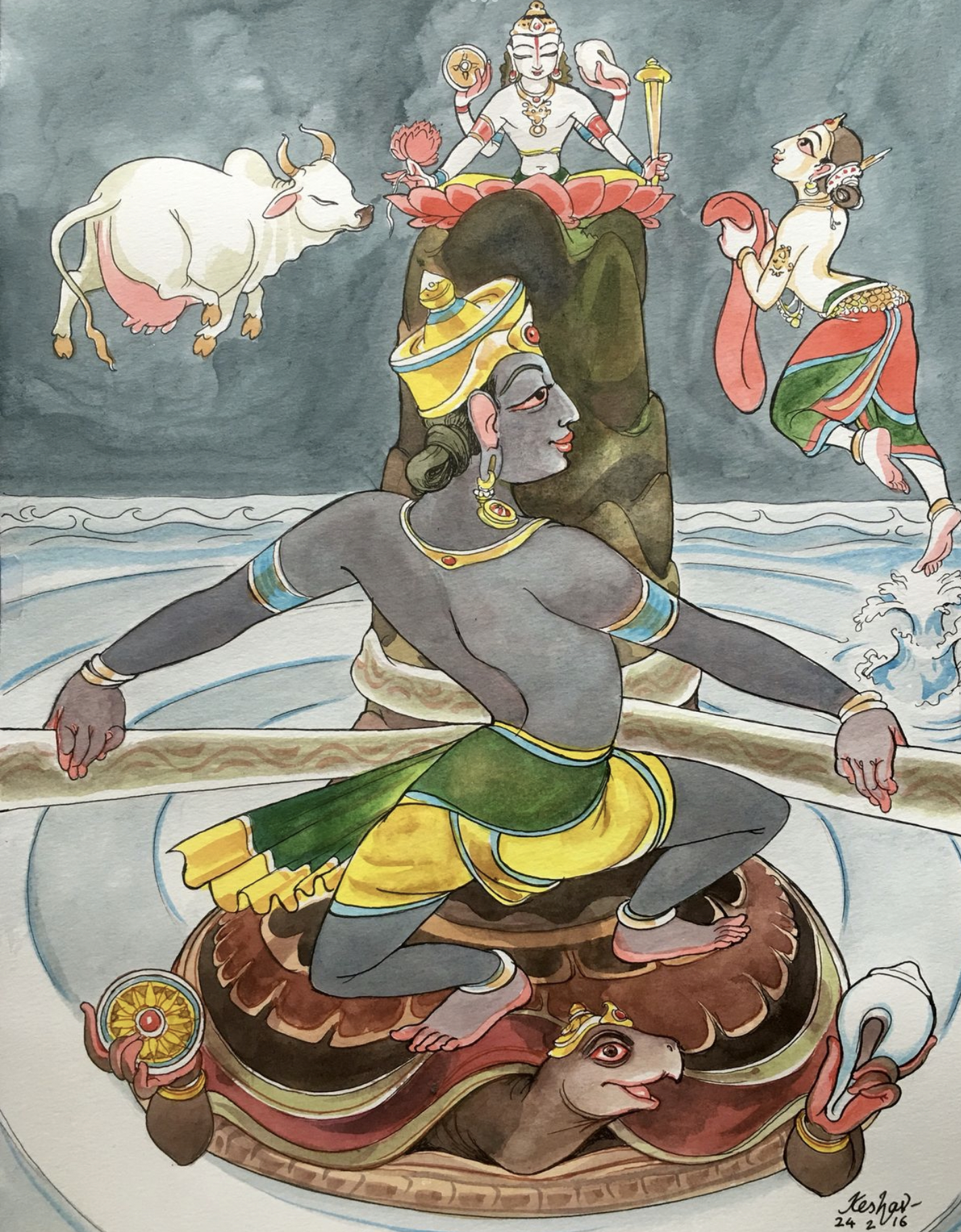
The Kurma avatar, like all other incarnations of Lord Vishnu, holds significant importance that extends beyond mere storytelling. The term “Kurma” translates to ‘tortoise’ or ‘turtle.’ It represents the second of his ten most renowned incarnations, where Lord Vishnu took on the form of a turtle during the churning of the ocean, known as Samudra Manthan.
The Kurma avatar is cherished not only for the engaging narrative it offers to children but also for the multiple layers of symbolism it carries. Before delving deeper into its symbolism, let’s first explore the story of Kurma, the second avatar of Lord Vishnu.
The story begins with an incident involving Lord Indra, the ruler of the heavenly realm, who lacked humility. His disrespectful action towards Sage Durvasa, a highly respected yet short-tempered sage, led to a curse that would diminish his strength and dominance over the three worlds. Despite his attempts to seek forgiveness, Lord Indra’s fate was sealed. Subsequently, the gods lost their power to the demon race.
Fearing their defeat and humiliation, the gods turned to Lord Brahma for guidance, and he advised them to seek Lord Vishnu’s help. This led to the grand event of Samudra Manthan, where Lord Vishnu suggested that the gods enlist the aid of the Asuras to churn the ocean of milk in pursuit of the nectar of immortality, Amrit, to regain their strength.
However, a crisis emerged when the churning stick, Mount Mandar, began to sink. It was at this critical moment that Lord Vishnu assumed the form of a giant turtle to support the mountain’s weight. The ocean yielded many precious things, including the nectar of immortality (Amrit) and the deadly poison, halahal. While Lord Shiva consumed the poison to ensure everyone’s survival, a conflict arose between gods and demons over the Amrit.
To prevent the precious nectar from falling into the hands of selfish demons, Lord Vishnu transformed into the enchanting Mohini. In this form, he charmed both gods and demons with his beauty, ultimately tricking the demons. As Mohini, Lord Vishnu gave the real nectar to the gods and only sweet water to the demons, aiding Lord Indra and the other gods in regaining their power.
The Kurma avatar, like the first avatar, Matsya, finds its origins in puranic stories and scriptures. Many scholars interpret Kurma avatar as a symbol of balance, representing the equilibrium that maintains harmony by bearing the weight of conflict and self-reflection.
The churning of the ocean symbolizes self-reflection and meditation, leading to positive and negative outcomes, represented by Amrit and halahal. The gods and demons symbolize the dichotomy of human tendencies, reflecting how life is a constant struggle between our choices. It emphasizes that both our good and bad choices determine whether we attain nectar or poison.
Kurma avatar exemplifies stability and strength, achieved through discipline and withdrawal. Just as a turtle can retreat into its shell, we must withdraw from worldly illusions to attain moksha, or the nectar of life.
Kurma Jayanti, the celebration of the second incarnation of Lord Vishnu, is observed by Vaishnavs in India. This celebration commemorates the birth of Kurma avatar and involves specific rituals, including fasting, night-long chanting of Vedic mantras, and charitable acts. It’s considered an auspicious occasion for new beginnings and is celebrated with great devotion by Vaishnavs worldwide.
Temples related to Kurma Avatar:
- Kurmai Varadaraja Swamy Temple at Kurmai village, Chittoor, AP
- Srikurmam Kurmanathaswamy Temple, Srikakulam, AP
- Gavi Ranganatha Swamy, Gavirangapura, Hosadurga, KA
Image Credit: www.krishnafortoday.com
 Self Discovery
You must be logged in to post a comment.