Bhakta Prahlad

prahlad

[Prahlada to Lord Vishnu:]

Whatever comes, let it come; whatever goes, let it go. Let notions of diverse experiences either arise or set in the body: I am neither in them nor they in me.

Even as steel cuts the steel-beam which has been heated, I have subdued the mind with its own purified state. I have cut asunder cravings, ignorance and foolishness by their opposites. Egolessly, my body functions with its inherent energy. The past tendencies, mental conditioning and limitations have been completely destroyed. I begin to wonder: how was it that for such a long time I was caught up in the trap of ego-sense! Freed from dependency, from habits of thought, from desire and cravings, from deluded belief in the existence of the ego, from the coloring of pleasure-seeking tendency and from revelry — my mind has reached a state of utter quiescence. With this all sorrow has come to an end and the light of supreme bliss has dawned! (V:35)

[Vishnu to Prahlada:]

Even though you are in the body, since you do not have the body, you are bodiless. You are the observer which is immaterial intelligence: just as, though air exists in space it is not attached to space, and hence it is free from spatial limitation.

Enlightened men, though they be constantly engaged in activity, do nothing: it is not by means of inaction that they reach the state of non-action! This very fact of non-action frees you from experiences: for there is no harvest where there is no sowing. When thus both notions of I do and I experience have ceased, there remains only peace; when that peace is firmly grounded, there is liberation.

Without self-inquiry and the consequent inner tranquillity, neither devotion to Lord Vishnu nor self-knowledge is possible. Hence resort to self-inquiry and the practice of the End to distraction and thus adore the Self: if you are successful in this, you have attained perfection.

Lord Vishnu (Supersoul) in fact dwells as the innermost being of all; they are surely the worst among men who, abandoning the indweller, seek Lord Vishnu outside. Consciousness free from the limitations of the mind is known as the inner intelligence: it is the essential nature of no-mind. That is the reality, that is supreme consciousness, that is the state known as the supreme self, that is omniscience.

One should enjoy the delight that flows from peace. The man whose mind is well-controlled is firmly established in peace. When the heart is thus established in peace, there arises the pure bliss of the Self. O mind, abandon this perception of diversity and realize the unreality of your own independence from the infinite consciousness: this is liberation.

Story about how Bhakta Prahlada became Videhamukta

Bhaktha Prahlada attained the true Self Knowledge through his intelligence. After his father Hiranyakasipu, the King of Danavas, expired, the sore-grieved son gave vent to the following words with a palpitating heart.

Countless were the numbers of Danavas born in my race, such as my father and others. They had bodies which cast into insignificance even Mahameru itself. They were able to do or undo even the lotus-born Brahma with his powers. But before Vishnu wearing the Tulsi garland, they fell easy victims to his fiery ire, like cotton before the wind.

There is none now who is not afraid of Vishnu. There is only one means of conquering the efful gent Vishnu, my enemy, wearing the discus. Think however we may, there is no higher goal than this. The real refuge can be sought only in Vishnu residing in the ocean of milk. Therefore let my mind from this moment seek an asylum in the seat of Narayana (Vishnu).

May I through devotional meditation, be “ He” and inseparable from Him. May the Maha Mantra *AUM NAMOH NARAYANAYA* which confers upon its devotees whatever they long for, be inextricably inter woven and commingled within me, like the Ether pervaded by the wind. Those who salute and worship Vishnu will be able to attain their desired results of emancipation, only when they contemplate upon Vishnu as themselves. Otherwise such results will not accrue. Following that path, I will worship and meditate upon Vishnu as myself.

This body is no other than the form (or manifestation) of Vishnu. He who is bound by this body in the form of Prana-Vayu is Vishnu, the supreme of the supreme. That which goes before Prana-Vayu abides externally as the second Vishnu. Therefore collecting mentally all articles of worship, I shall always worship Vishnu as above.

With this purpose in view, he created, through his mind articles of worship and then worshipped with them, Lord Vishnu with true love in his divine place.

From that time forward, be began to ever worship the feet of Vishnu, the one partless Brahman. Thereafter, all the bad people bearing axes began like Prahlada to be the slave of Hari (Vishnu), abandoning all their bad qualities. Are not thus the qualities (good or bad) of a king imbibed by his subjects ?

Indra and the other Gods marvelled with fear at this unprecedented event and were sceptical as to how these vicious personages were able to secure the love of Vishnu. Therefore they went to Vishnu, sleeping his long (Yoga) sleep in the sea of milk and having seen and eulogised him, addressed him thus : “

If all the Daityas of fiery nature after meditating upon you become merged in thee, then there cannot be but Maya everywhere. These words of the Gods were replied to by our Lord Vishnu thus, “ Oh Gods, do not be afraid. The victorious Prahlada has rendered himself no more liable to re-births. Freed from his murderous propensities, he has reached Moksha through his Tatwa Knowledge vision.

Therefore do not suppose that there is any deception practised by him. If good persons incline their minds towards vice, then manifold evils will ensue ; but if the vicious incline towards the virtuous path, then incalculable good will result. Therefore may all of you fare well.”

Through the steady application, Prahlada’s worshipped with supreme discrimination, bliss and indifference towards objects, etc.. With the development of the four means (of salvation), all his minds attractions towards sensual objects ceased. Therefore his mind became quiescent, without sinking into sensual objects.

The mind of Prahlada was oscillating like a cradle between the cognition of the all-full Reality and the enjoyment of sensual pleasures. Prahlada then prayed to Lord Vishnu thus“Oh you, the original seat of all rare things in the incomparable mansion of the three worlds ; Oh you, the ever-resplendent Brahman without the dawning and the setting of the sun in you ; Oh you who are the eye of mercy to all the votaries, salutation, salutations, a thousand salutations to thee.

Oh you who are the Tatwa (Reality , the prototype of all grace and the lord of all earths, salutations, salutations, a thousand salutations to thee. O : you, who are the sun to the full blown lotus of Gods walking in the path of the Vedas ; Oh you, who are the Lord of all souls, salu tations, salutations, a thousand salutations to thee.”

Lord Vishnu spoke  to him thus * Oh Prahlada of true love, you are free to demand of me a boon which will not make you be subject to the trammels of re-births.”

To which Prahlada said thus * O you Supreme Principle who resides in the hearts of all, please vouchsafe to confer on me that bliss wherein there are no pains.”

Thereupon Vishnu blessed him by laying his lotus-like hand upon his head with these words : ** May the final Atmic enquiry arise in you in order that you may attain quiescence in the Brahmic bliss of the pure ParaBrahma, after your mind is freed from the delusions of the world.”

The incomparable Lord has deigned to bless me with the Atmic enquiry enabling one to overcome re-birth. Let me cogitate upon the questions, whom am I? What was I before? What is the nature of this “ I” which identifying itself with the parapher nalia of this world (and body) stays and runs, cries and laughs, exults and is afflicted ? I am not this diverse world. How can this inert world be called the “I, “as the former is external to the latter and is composed of hills, stones, preity things, earth, trees and others ?

Neither can the temporary body be called the “I,”. Nor is the inert property of form this “ I,” which dies in the “knower” who though acting in this perishable world and sight is yet no participator in it. Now have I cognised my Reality as shining both within and without, as the one pure Knowledge of pure Sat and without re-birth, being freed from all ideas of “I” and “mine,” from all Sankalpas and from all the delusions of the five organs, without the least despondency of heart. This is perfectly certain.

Ha, Ha, now have I known my true Self. Is this the Atmic Reality which shines, in the path of spiritual knowledge, in the intelligence of one divested of all diversities? In the one Tatvva Knowledge which is no other than the “ I” pervading everywhere without fluctuation, all the universes from the sun down to a pot shine.

Like sparks of fire which shine through the heat in the burn ing fire, so I find, in my present illuminated state, that all the organs performed diverse actions through me only. All Individuals from Brahma downwards will shine as my Reality alone in the one space at the end of a Kalpa when all the universe goes into Pralaya;

How then can exist the ideas of “I” or “ he” which pertain to the mind ? How can “ I” which now shines as the one full Knowledge throughout this infinite universe, possess the modifications of this reasoning mind, with a seat allotted to it in the body. Therefore my spiritual vision of quiescent Knowledge which is eternal, blissful and in comparable is in all the worlds.

All the manifested appearances are only the spiritual vision of the one subtle ideation. As all Individuals are no other than “ I”, the invisible Knowledge and Pratya- gfitma that has no other object than itself to lean upon, I offer salutations to them all on account of (their non-divisibility from) my own Self.

Out of the differenceless Knowledge which has no thoughts other than its Self, which is pure, equal in all, without differ ence, beyond and without the three divisions of time past, present and future arose the diverse transcendental (Sakthis) potencies.

The non-dual Knowledge without attractions to any is equal unto itself alone. As it is above all words, a principle equal unto Self Knowledge cannot be found in words. If the imperishable non-desires should become replete in one, which are invisible and pure and yet like the illusory worldly things, then there will remain equal vision overall, like a waveless ocean. But a mind whirling in actions associated with activity and passivity will be bound, like a bird caught in a net.

Therefore all persons who are afflicted with love and hatred and are thereby dizzy in mind, cling to this earth like poison.

O you illuminated dweller in the mind of all souls, I have been able to attain You only after a very long period. You are fit to be enquired into through the holy sentences of the Vedas and Gurus. You shinest as of the nature of Self Knowledge which is pure bliss.

Many salutations to You who are “That” into which all things merge. You are the Eternal Knowledge wherein “ I” am “ thou” and “Thou” are “I”. Prostrations to you my Lord, the ParaBrahma, the infinite consciousness.

Prostrations to myself which has attained its Reality, shining as itself in a blissful state and as the one Consciousness without any  thoughts. Though seeming to be mobile or immobile or quiescent, it is yet without such actions. Though performing all actions, it is yet without desires therein.

It is He who is sought after by the bodies and organs. It is He who is- praised by the organ of speech. It is He who is meditated upon by the mind. It is He who causes birth and death to-be bridged over. It is He who can be easily attained to. It is He who can cognize all.

I have no love or hatred towards sensual enjoyments. Let me attain those things, I am destined to get; let me not long after those things, I am not destined to get. Originally I became oblivious of discrimination and other blissful things through my inimical Ignorance.

Now I am in possession of Self Knowledge, Having destroyed my mind sunk in Samsara with my discrimination that had labored hard in the Spiritual Inquiry, having freed myself from all the painful Ego, having annihilated all conceptions of duality by meditating upon non-duality, I am now the incomparable ParaBrahma (infinite consciousness) in an immovable state.

Victory to thee, imperishable God. Victory to thee, the seat of final quiescence. Victory to thee, beyond the reach of all Vedas.

Victory to Thee, the source of all Vedas. Victory to thee, the cause of creation. Victory to thee, the causeless cause. Victory to thee, the perishable cause. Victory to thee, the imperishable cause.”

Thus did the noble son of Hiranya meditate through his pure mind and enjoy bliss in the supreme differenceless Nirvikalpa Samadhi of great omniscience. As he seated him self statue-like in Nirvikalpa Samadhi for 5000 years and remained steadfast in one vision (or thought) only, there prevailed anarchy in his Kingdom.

The stainful Danavas who are the night-rovers bearing axes have ceased to exist, all the Gods are deprived of war in their absence and will became quiescent and attained Moksha.

With the quiescence of Gods, all the Yajnas done on earth in their honor as well as Tapas, will be barren of results, and therefore fade away from earth. With the cessation of the laborious performance of these Yajnas, and other actions, the universe will have to come to a stand still.

And then all created objects will cease to exist. Should all the created objects such as the sun, moon, etc, disappear, then we shall have to give up this form of ours and reach the non-differentiated state of * That* ParaBrahma. Were all the archaic universes to perish before their allotted time, then no real benefit (or law) will reign in this world.

The beneficent Vishnu caused his Panchajanya (conch) to be sounded in order to intimate to Prahlada his arrival. Through the terrible reverberating sound which pierced the earth, the skies and the quarters, Prahldda who was merged in the primal seat of “That”, slowly recovered consciousness on this plane.

The Chaitanya Sakti (or consciousness potency) issuing first out of Brahmarandhra pervaded, as before, the Nadis to all the parts of his body and when it got to the nine apertures of the body, Prahlada became conscious of this (physical) plane.

Then his Chaitanya (consciousness) began to perceive material objects, only alter it shone as the reflection in the glass of the internal Prana. Hence that intelligence of his which manifested itself in objects, may be compared to the reflected image in a mirror and thus assumed the attributes of Manas. As he recovered consciousness little by little like a lotus unfolding its petals gradually, his beautiful eyes opened. Then the beneficent Prana and Apna began to percolate all throughout his Nadis (nerves) and organs, thus producing a complete perception of the world. Like a lotus fanned by the mild zephyrs, Prahlada began to move in his position. In the twinkling of an eye, his mind became gross and his eyes, mind, Prana and body began to glow with life with their respective functions.

Thereupon Vishnu eyed, with great grace, Prahlada and blessed him thus “Oh immaculate Prahlada, go and look after your Kingdom which is praised and coveted by Indra, the lord of Devas. Also look after your body. Why do you think of abandoning this, your body at such a premature period as this ? So long as you are not haunted by the San- kalpa of attraction and repulsion towards objects, what mat ters it whether your body exists or not ?

Now get you up from Samaddhi. May you, O Prahlada, be in the Jivanmukti state. May you, until the end of this Kalpa, administer due justice in this world with this body of yours in the Jivan mukti state, but yet without groaning under the load of Samsara. Why do you now in vain die (or disappear from this world), when neither the fires nor the twelve suns burn the universe out of existence (and the Kalpa has not yet closed) ? The lives of those only are blissful, who, having mastered egoism and desires, do cast their eyes equally upon all, which vision confers infinite bliss.

The lives of those only are blissful who, devoid of love and hatred and having rendered their minds cool, are witness to all actions, though performing them. He who is attracted towards objects as well as the objects themselves are both bondage-giving ; the severance (of the mind) from objects constitutes quiescence. It is only when this quiescence is mastered that Moksha is attained. Now in as much as you have reached that state, you should seat yourself on your victorious throne (of the quiescent mind) and reign over your kingdom. May you reign till the end of this Kalpa.”

Aum Pratyahara Pranayama Purushottamaya ParaBrahmane Namaha

Aum Satsang Self-control Self-inquiry Contentment

Aum Desireless Egoless No-mind Unconditional-love

Aum Pray Purify Meditate Love
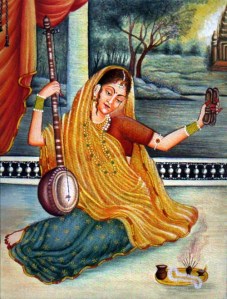
Aisi lagi lagan meera ho gayi magan

Meerabai

1498 CE. The royals of Merta, a small state in Rajasthan were rejoicing. A baby girl was born to them.  She was named Meera. Her father, Ratan Singh had to travel a lot. Meera stayed home with her mother in the household of her grandfather, Rao Duda ji Rathore. They were devotees of Lord Krishna. Like other Rajput girls, Meera had to learn a lot of things. She learned music and many stories from the Scriptures, but also how to fight with bows and arrows, and with a sword, how to ride a horse and drive a horse-drawn chariot. She had to. Her people were counting on theirs and the other royal families of Rajasthan to lead them in war against the Mughal rulers. But Meera was only a little girl. She listened to her elders talk about the fighting, cried in sadness for the dead, but could not understand why they are always fighting. She liked playing with her mother much better. One day, when Meera was about four years old, she heard the sounds of joyful music just outside their palace walls. She ran excitedly to her mother.   “Ma! Ma! Do you hear the music? Can we go watch? Please, Please?”   “Okay, Meera”, her mother said. “Let’s watch them from upstairs, through the lattice walls.”   It was a marriage procession. The groom was leading it, riding a white horse. He was wearing a jeweled turban, looking like a young king. Everyone in the party was happy, singing and dancing as they went! Meera was happy watching them.   “May we go with them, Ma?” Meera asked. “No, Meera, not this time. You are too young.” Her mother replied. Then she picked Meera up and said, “Can you see the handsome fellow on the white horse?” “Yes, Ma. I see him. He is wearing a turban like father does. Where is he going?” “He is the groom. He is going over to marry his bride.” After watching the marriage party for sometime, Meera thought of another question. “Will I be married, Ma? Who will be my groom?” “O, Meera, you are too young.” “No, no, Ma! Please tell me who?” “Hmm…let’s see who will be my Meera’s groom.. who will he be? Why yes, I know. You will marry Thakurji, Krishna Bhagavan.” Meera’s mother said half in jest as she ran her fingers through Meera’s pretty curls, tousling them.   “Is that so, Ma? Please give me my husband, Krishna Bhagavan.” So they went to the shrine. Meera’s mother picked up a really beautiful, black stone statue of Lord Krishna, playing the flute and gave it to her. “Here is your groom.” That was how Meera knew that she was to marry Lord Krishna. Not too long after that, Meera’s mother passed away. And then her grandfather also passed away. Meera’s elder uncle, Viram Dev became the new head of the household. Little Meera didn’t know who to go to anymore, and grew increasingly close to her husband, Lord Krishna. Do you know what the name “Krishna” means? It means the “all-attractive one”, God in His most charming. It is true.  Love Lord Krishna for one instant, you will see how you too will become permanently attracted to Him. What to say about Meera? She was only a guileless child. Lord Krishna became her life in no time. Meera grew up to be a most beautiful young princess. Everyone far and wide heard about her beauty. But few knew about her love and devotion to Lord Krishna. Meera had many talents, she was a poet and a singer. She wrote songs and sang them to Lord Krishna. One day, when Meera was eighteen years old, they had a visitor. It was Rana Singh Sisodiya, king of neighboring Mewar. He wanted to join forces with the Rathores in their common battles against the Mughals. He proposed that Rathore princess be wed to his son crown prince Bhoj Raj. The marriage was settled, and Meera was to be married to prince Bhoj. Meera herself was not keen about the marriage, but agreed to it only to honor her uncle’s word. Before the marriage, she ceremoniously married Lord Krishna.  Her uncle and aunt gave many gifts, and send them off to the house of Sisodiyas at Chittor. Meera’s marriage to Bhoj was in name only. At heart, Meera was married only to Lord Krishna. She was gentle with her husband Bhoj and her family, and served them with all her abilities, but loved only Lord Krishna. Prince Bhoj loved Meera, and tried his best to make her happy. He wanted her company, but Meera spent all her free time for Lord Krishna, writing songs and singing them. She sang: My only husband is Giridhar Gopal (Lord Krishna), and nobody else. Other members of the Sisodiya family began to disapprove of her ways. They thought that Meera was too proud and did not want to belong to their family. Bhoj Raj tried his best to make peace in the family, but that was not to be. None of the discontent was noticed by Meera. She couldn’t think of anything else other than her true love, Lord Krishna. Meera would go to temples of Lord Krishna and sing with other devotees of Lord Krishna. Sometimes, she visited Sant Ravidas for Spiritual guidance. The Sisodiyas did not think that Meera should go out of the home. They became very unhappy with Meera. Her uncle and aunt also did not approve that Meera went outside of the home. Three years later, Bhoj Raj died in battle with the Mughals. With his death, there was nobody else in the Sisodiya family to speak for her.  Her in-laws even tried to kill her, by giving her a poison drink, but she was miraculously saved. Meera sang: O Rana! You gave me poison drink but I became gold burned in fire. At the end, Meera’s in-laws suggested that she should go to the river and drown herself. Meera decided to do this. When she went to the river, she heard a Divine voice, “Meera, it is a very grave sin to kill oneself. Go to Vrindavan.” Vrindavan is the holy land where Lord Krishna spent his childhood days. Meera left her home for Vrindavan, singing love songs for Lord Krishna.  She sang: That dark Dweller in Braj (Lord Krishna)  is my only refuge. In Vrindavan, Meera came to the monastery of Jiva Goswami. She wanted to see him. Goswamiji had earlier taken a vow that he will not see any woman. The disciples of Goswamiji did not want to let her in. Meera said, “I thought that in Vrindavan, Lord Krishna is the only male person. Now I see that Jiva Goswamiji is another.” All devotees, man and woman, consider themselves to be Spiritual brides of Lord Krishna, just as the gopis did. When the disciples brought the news to Goswamiji, he realized that he had a really special visitor and came out to greet her with folded hands. Meera became Sant Meerabai. Meera spent some time in Vrindavan, singing for Lord Krishna at every temple. Let me be your servant, O Lord. Afterwards, Meera went to Dwarka, in Gujarat. She went to the Ranachodji Krishna temple. She wrote more songs, and sang them. She had no more wordly distractions. Meera wrote more than 400 songs. Her songs are a journal of the deep love she had for Lord Krishna. She wrote in Rajasthani and Vraj dialects. The lyrics are reverently called pada. Devotees get inspiration from her songs. Some of her songs are set in tunes created by her, including Raag Govind and Raag Mira Malhar.  Her writings are in the Madhurya (sweet love) tradition of devotion. The Rajputs fought on till 1535 CE, when the nawab of Gujarat, Bahadur Shah, defeated them. To avoid being captured, Rajput women committed mass suicide in fire. Later, in 1547 CE, the elder Rajputs sent for her, asking her to return home. Meera refused to go. Then they sent a group of priests to reason with her. The priests told her that they will fast until she relents. Meera entered the temple, to pray and ask Lord Krishna what she should do. Lord Krishna told her to come to Him. As she approached the stone image of the Lord, her body disappeared into it. Only her sari was found draped around the image.

Dasavtar – The 10 Incarnations of Lord Vishnu

The Avatar concept is a corner stone in Hindu philosophy. Avatar is a descent or a direct incarnation of God to ascent the mankind. Periodically the Supreme Lord Vishnu descents upon the earth, in animal or human forms and the  mission is to preserve the world from the increasing evil. There are 10 avatars of Vishnu.

Narrates Krishna to Arjuna Whenever Dharma, or the situation of law and order, is endangered on this world, I incarnate onto this world to re establish Dharma, law and  order, and to protect the Sadhus or saints and to destroy the evil elements of the society.  – Bhagavat Gita

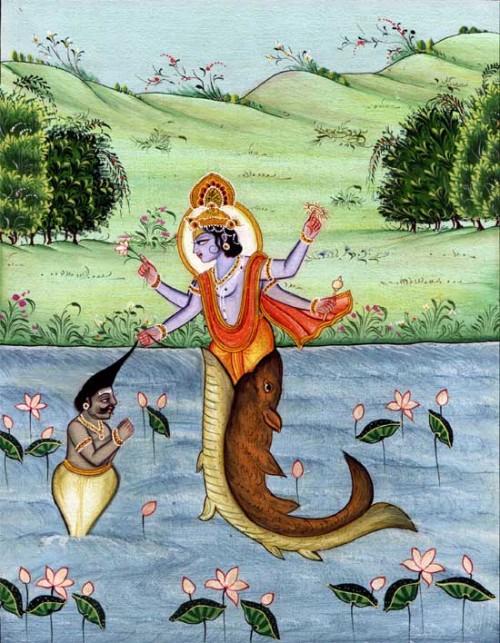
Matsya Avatar  Matsya the fish

In the earliest yuga (era) of Sata-yuga, a king named Manu was performing severe penance for thousands of years. One day as he was performing ablutions with river water, a small fish came into his hands and just as he was about to throw the fish back into the river, the fish requested the king to save its life. Heeding its request, the king put the fish into a jar of water but the fish started growing and the jar was not big enough for it. Then the king threw it into the river, but it soon it outgrew the river and the king then threw it into Ganges and then into the ocean. The king realised that it was Lord Vishnu himself and then the lord made an appearance and made a special request to the king. It predicted that the world would come to an end by a huge flood in seven days and requested the king to build a huge boat and take the seven sages(hermits), seeds of all plants, one animal of each type and told him that he would appear as a fish to propel the boat to Mount Himavan for surviving the flood to the next yuga(eon). True to his word, after seven days the Lord appeared and the king tied the boat to the fish by using the royal serpent Vasuki and the fish took all of them to Mt Himavan and kept them there till the flood was over and in the new era, the king started procreation a for the new era.

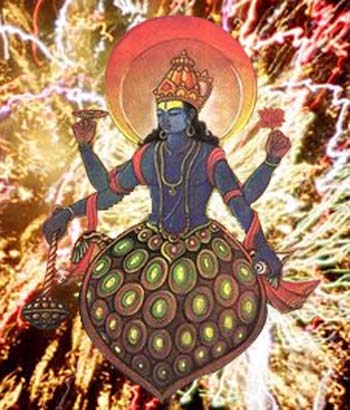
Kurma 1Kurma  the Tortoise

Further to Pralaya- deluge at the beginning of the present Kalpa the Gods (devas) lost their immortality due to a curse by the short-tempered sage Durvasa.The sage had once presented a garland of flowers to Indra,king of gods, who carelessly gave it away to his elephant which trampled it.  The Devas approached Vishnu for help. Vishnu then asked them to churn the ocean of milk after adding medicines into the ocean. Mt Mandara could be used a the churning stick he said. He requested them to ask them help of Asuras in lifting the mountain in exchange for offer of the share of nectar of immortality that would ensue from the churning. Both the devas and the asuras churned the ocean using the serpent Vasuki as the rope. At the start, playing a Machiavellian trick, Indra, king of the gods asked the asuras for the head end of vasuki. But asuras suspecting foul play, took the head end, only to be deceived as the poison from Vasuki was slowly weakening them. But as churning was proceeding the mountain was sinking and then Lord Vishnu took the form of the tortoise KURMA and kept the mountain afloat. As soon as the bowl of amrita, the nectar of immortality was out, the asuras grabbed it. Then Lord Vishnu took the form of an apsara, a beautiful maiden, and seduced the asuras into letting her distribute the nectar and also to abide by her order of distribution. As soon as the devas were served the maiden disappeared thus totally deceiving the asuras and making them totally weak.

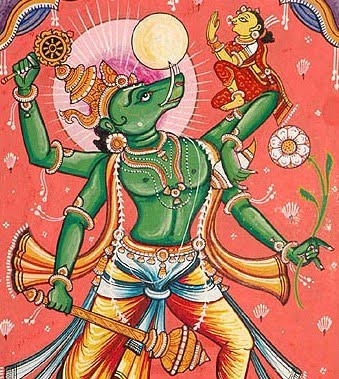
Varaha Varaha  the Boar

A demon Hiranyaksha, had prayed for Lord Brahma and got awarded a boon that no beast nor man nor god could kill him. But somehow from the list of beasts the name of boar was missing. This proved to be his lacunae. He then started a campaign of plunder across the worlds. He pushed the world to the Pataal loka, or the under of the sea. He stole the Vedas, the holy scriptures from the Lord Brahma, while he was asleep and performed huge atrocities.To retrieve the Vedas and to save the world the Lord Vishnu assumed the role of a boar and brought out the earth from the under of the ocean, using its two tusks. It then killed Hiranyaksha and retrieved the Vedas from the asura and brought it back to the safe custody of the Lord Brahma.

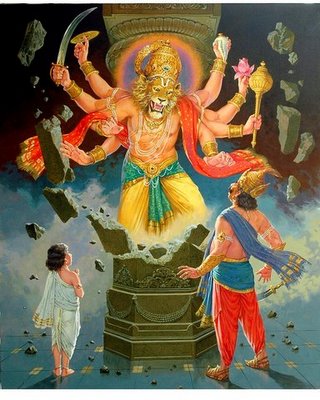
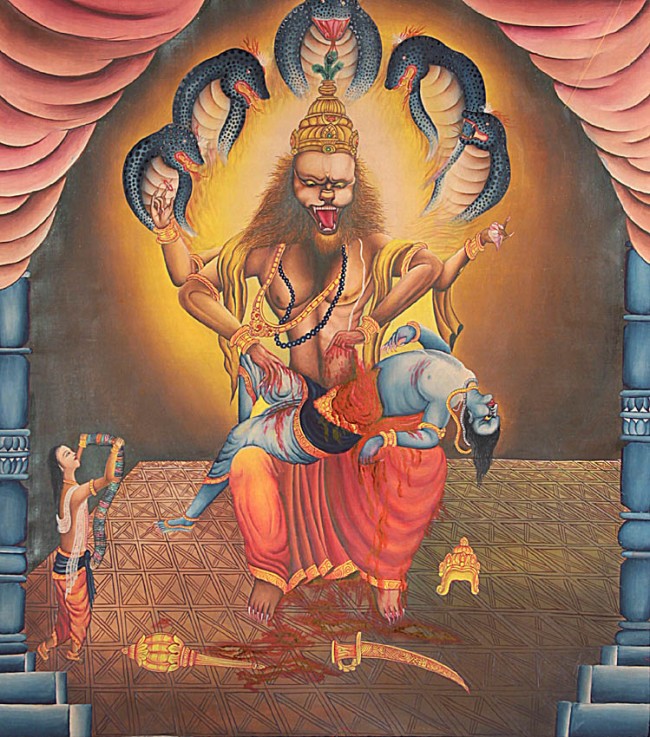
Narsimha 2Narashima  giant lion-man

In NARASIMHA Avatar, Lord Vishnu incarnates himself as a semi-man,semi-lion in this world. The king of demons(asuras), Hiranyakasyapu, wanted to become immortal and wanted to remain young forever. To this end, he meditated for Lord Brahma and because of his severe penance, the gods were frightened and asked Brahma to pacify the king. Brahma was impressed by his austerity and granted him a wish. Hiranyakasyapu wished that he be  killed neither by a man or beast, nor in daylight or at night and neither inside or outside a building. Having obtained the wish he considered himself the supreme God and forbade all worship of gods by anyone. But his son Prahlada, was an ardent devotee of Vishnu. This enraged Hiranyakasyapu very much. He ordered numerous ways to kill Prahlada including asking his sister Holika to sit with Prahlada in the fire. But every time Prahlada escaped unhurt. Enraged, once he asked Prahlad to show him the Lord Vishnu. Prahlad said, “He is everywhere”. Further enraged, Hiranyakasyapu knocked down a pillar, and asked if Lord was present there. Lord Vishnu then emerged as a half lion, half man from the pillar, and carried him under the arch of the doorway (neither indoors nor outdoors), and the time was evening (in the twilight), neither night nor day. He then killed Hiranyakasyapu with his  claws by keeping him on his thighs (neither on earth nor in the sky) thus saving the life of his devotee Prahlada.

vaman 1 Vamana  the dwarf

BALI, the grandson of Prahlada was a very valorous and mighty asura. By his penance and might, he conquered the whole world. Indra and other gods fearing that he and the asuras would conquer all the three worlds, went to Lord Vishnu for help. Lord Vishnu was then born as a dwarf Vamana in the household of a brahman priest. He went to Bali on growing up and asked for alms. Bali was delighted to offer him anything he requested even though his royal guru warned him that it was Lord Vishnu. Vamana then requested for the amount of land that could come under his three feet. Bali gracefully agreed. Lord Vishnu then grew in size and covered the earth and heaven in two stride. And due to lack of space, he put his third leg on Bali himself and crushed Bali to the nether or the Patala loka (underground world), thus helping the Gods out.

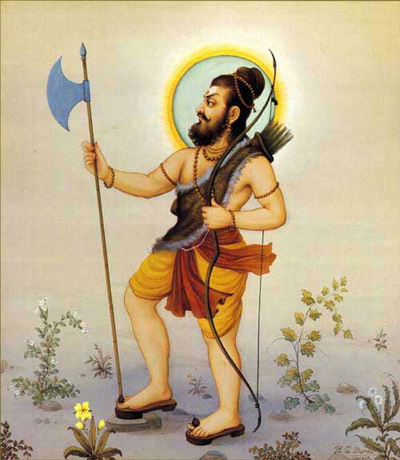
Parasurama Rama with the axe

Parsuram1

In PARASURAMA Avatar, Lord Vishnu incarnates himself as a brahman priest in this world. He was brought in this world to avenge all kshatriyas who had become arrogant and were suppressing the brahmans in the world. He was born with unusual physical power, and became better fighter than any Kshatriya.He was born to Jamadagni and Renuka, and belonged to the Brighu clan. Parashurama was always carrying an axe presented to him by Lord Shiva of whom he was an ardent devotee. Kartavirya a powerful king, once went to Jamadagni’s home when he was out, and after a meal, stole the Kamadhenu cow, which was supposed to give endless quantity of milk. Jamadgni was enraged and he went and killed the king and brought Kamadhenu back. On hearing this the son of the king came back and killed Jamdagni. Parasurama was enraged at this and went and avenged the death of his father by killing all kshatriyas in 21 battles. His life is story of the supremacy of brahmans over the kshatriyas.

Shri Ram3

 Sri Ram

It is the most important Avatar of Vishnu. Rama represents the peak of the historic incarnations, and by him it is defined the ideal character of Indian people.He is Vishnu descended upon earth to conquer all the Indian peninsula, included Sri Lanka, under the Bharata rule. Lord Rama is one of the most adored gods in India. He is always holding a bow and arrow indicating his readiness to destroy evils.His story forms the epic Ramayana. He is perfect in every aspect; the perfect man, the perfect husband, the perfect brother, the perfect king, etc. and the obedient son. Commonly he is pictured in a family style, with his wife Sita, and brother Lakshman.

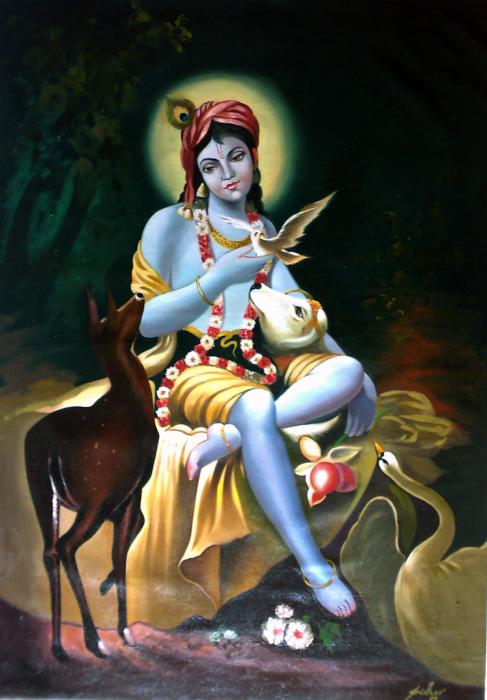
krishna1Sri Krishna

In KRISHNA Avatar, Lord Vishnu incarnates himself as KRISHNA , the central character in the epic MAHABHARATA. In this biggest epic of Indian mythology a myriad of topics are covered, including war, love, brotherhood, politics etc. It is essentially the story of two warring groups of cousin brothers, the PANDAVAs and the KAURAVAs. As a part of the Mahabahrata, during the war KRISHNA, gives a long discourse to his disciple ARJUNA, collectively termed as Bhagvad-Gita. Krishna, during his child-hood was responsible for the killing of Kansa. Krishna is also considered to be an ultimate playboy who was resonsible for charming all gopikas (cowherdesses) around him. Unlike Ramayana, Mahabharata deals with more down to earth issues like politics, human nature, human weaknesses, and does not attempt to idealise the characters as in RAMAYANA. His death marks the beginning of Kali yuga.

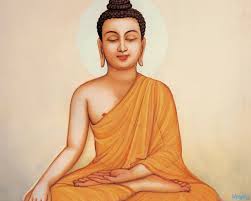
budhha

Buddha

With the departure of Lord Krishna (Krishna Avatar), the Kali yuga set in. In this age, the true devotion to Vedas was replaced by empty rituals.  To enlighten the world, Lord Vishnu descended the earth as Buddha, the enlightened one.

He was born as the crown prince of the Kapilavastu to King  Suddhodana and Maya. He was named Siddhartha, meaning “All thing fulfilled”. But his mother died soon after his birth and was broughtup by Prajapati, the sister of Maya. Buddha was saddened by death of living creatures, and vices like poverty. He wasn’t happy with any answers that were provided to him and he decided to find out the meaning and the absolute truth and he left his wife and child to a hermit’s life in the forest and became the enlightened one.

His preachings spawned off the religion of Buddhism now popular across the whole world. Buddha advocated the Middle Path, in which he offered a balanced, harmonious way of life, steering between two extremes of self-indulgence and total abstinence. Buddhism rests upon four Noble Truths:

  • Suffering is universal,
  • It is caused by desire and yearning
  • Suffering can be prevented and overcome and
  • Eradication of desires can lead to removal of suffering.

To prevent suffering one has to conquer craving and desire and this conquest leads to the attainment of nirvana or complete enlightenment.

Kalki

Kalki is believed as the next Avatar of Vishnu.

It is believed that He will appear, riding his white horse and drawing a flaming sword, at the end of the Kali Yuga, the dark age through which we are now passing. His task will be to exterminate the evil and restore the Dharma. Thus will begin a new cycle, starting with the new Satya Yuga.