The Divine Conversations by the Kund: Radharani and Krishna’s Eternal Love


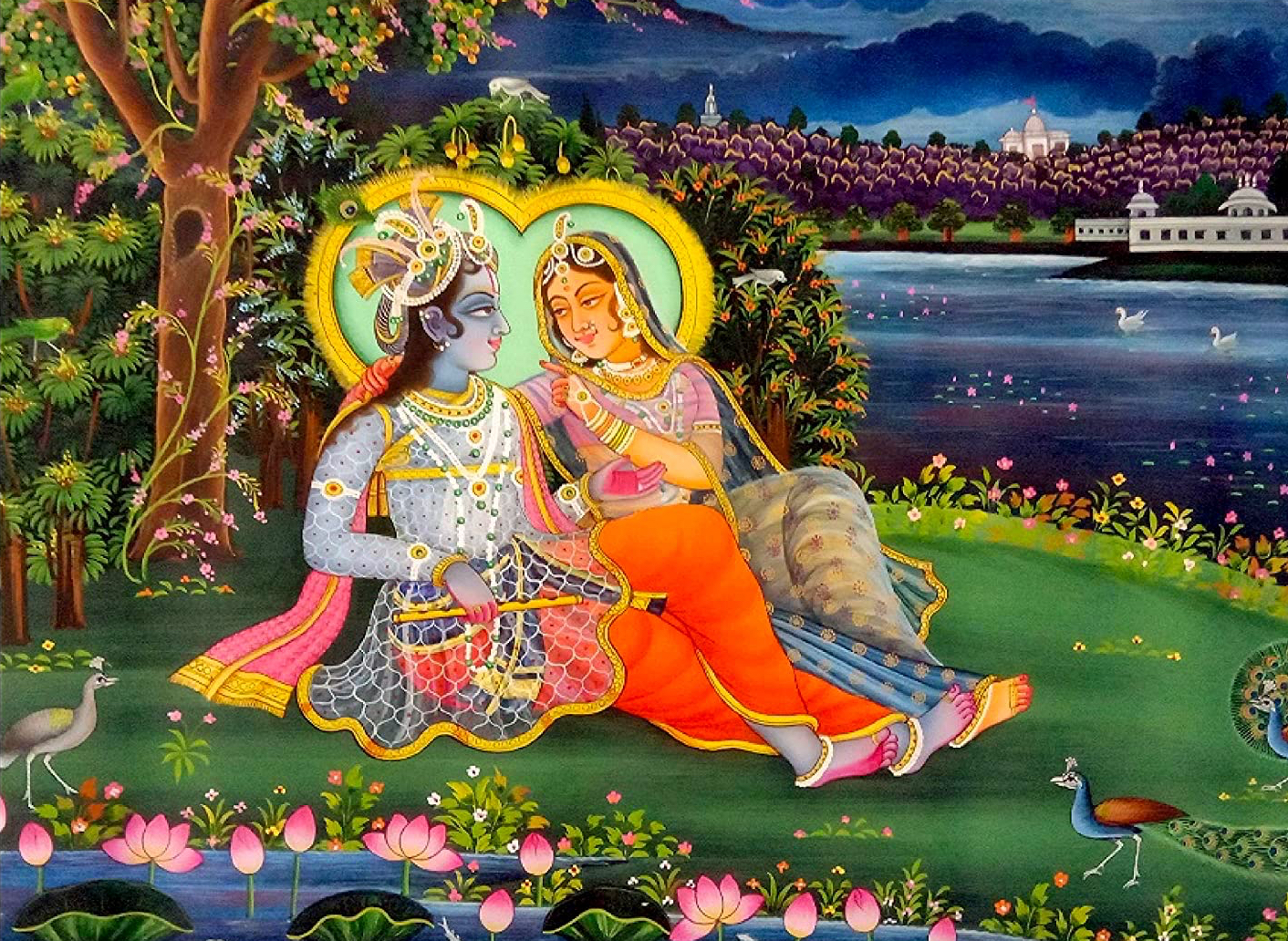
In the sacred land of Vrindavan, where every corner resonated with divine love, there was a tranquil kund (pond) nestled amid lush greenery. It was here that Radharani and Krishna, the eternal lovers, often found solace from the bustling world around them.

One warm and sunny afternoon, as the birds chirped and the gentle breeze rustled the leaves, Radharani and Krishna decided to sit by the kund for a quiet conversation. They sought refuge in the serene ambiance, away from the daily responsibilities of their divine roles.

They settled on the soft grass by the kund’s edge, their fingers intertwined, and their eyes reflecting the depths of their love. Radharani, with her enchanting smile, looked at Krishna and said, “Krishna, this place holds so many memories of our togetherness. The ripples in the water remind me of the moments when your playful pranks made me laugh.”

Krishna, with a twinkle in his eyes, replied, “Yes, Radhe. The kund has witnessed our laughter, our tears, and the vows of eternal love we exchanged. It is our secret haven where our hearts can speak freely.”

As they gazed into the tranquil waters, Krishna continued, “Radhe, I often ponder the meaning of love. Is it the melodies of our songs, the touch of your hand, or the sweetness of your laughter?”

Radharani, her eyes filled with affection, replied, “Krishna, love is all of those things and more. It’s the unspoken understanding we share, the way our hearts beat in harmony, and the feeling that time stands still when we are together.”

Krishna gently picked up a lotus flower floating in the kund and placed it in Radharani’s hair. “Radhe,” he said, “this lotus is like your heart—pure and untouched by the world’s impurities.”

Radharani smiled, her heart swelling with love. She touched Krishna’s cheek tenderly and said, “And your heart, Krishna, is like a boundless ocean, deep and mysterious, where I find my eternal refuge.”

As the sun began its descent, casting a golden hue over the kund, Radharani and Krishna continued to share their thoughts, their feelings, and their dreams. In their togetherness, they found the true essence of love—unconditional, eternal, and beyond the grasp of time.

The kund, with its tranquil waters and the love-filled conversations of Radharani and Krishna, remained a sacred witness to their divine love, a love that transcended earthly bounds and lived on for all eternity.

Image Credit: www.mahanidhiswami.com

The Divine Bond: Radharani and Her Asthasakhis – Guardians of Eternal Love


The story of Radharani and her Asthasakhis, also known as the eight principal companions, is a beautiful and cherished part of Hindu mythology, particularly in the context of Lord Krishna’s divine pastimes in Vrindavan. These eight sakhis are the closest confidantes and friends of Radharani and play a central role in facilitating the divine love between Radha and Krishna.

Here’s a glimpse of their story:


In the enchanting forests of Vrindavan, the love between Radharani and Lord Krishna bloomed like an eternal garden of divine affection. Radharani, with her unparalleled beauty, grace, and devotion, was the quintessential embodiment of divine love. Her love for Krishna transcended all worldly boundaries.

The Asthasakhis, or the eight principal companions of Radharani, were her dearest friends, confidantes, and partners in the divine pastimes of Radha and Krishna. These eight sakhis were Lalita, Vishakha, Chitra, Champakalata, Tungavidya, Indulekha, Rangadevi, and Sudevi.

Each Asthasakhi had unique qualities and talents that complemented the divine play of Radha and Krishna:

  1. Lalita: Lalita was the chief of the sakhis, known for her deep understanding of the intricacies of Radha and Krishna’s love. She played a crucial role in mediating their love quarrels and facilitating their union.
  2. Vishakha: Vishakha was Radha’s close friend and was known for her eloquence. She often engaged in playful banter with Krishna and helped convey Radha’s messages to him.
  3. Chitra: Chitra was an artist who captured the divine beauty of Radha and Krishna through her paintings and drawings. She immortalized their love through her art.
  4. Champakalata: Champakalata was a culinary expert who delighted Radha and Krishna with her delicious preparations. Her cooking added flavor to their divine meetings.
  5. Tungavidya: Tungavidya was a talented musician who enchanted Radha and Krishna with her melodious songs and dances.
  6. Indulekha: Indulekha was an expert in preparing fragrant and beautiful flower garlands for Radha and Krishna, enhancing the charm of their meetings.
  7. Rangadevi: Rangadevi was skilled in arranging and decorating the secret meeting places of Radha and Krishna, creating an enchanting atmosphere for their rendezvous.
  8. Sudevi: Sudevi was known for her discretion and played a vital role in maintaining the confidentiality of Radha and Krishna’s divine love.

Together, these Asthasakhis supported Radharani in her love for Krishna. They were the guardians of her love, ensuring that it remained pure and divine. They arranged secret meetings, conveyed messages, and offered their unwavering support in the eternal love story of Radha and Krishna.

The story of Radharani and her Asthasakhis is a timeless celebration of divine love, friendship, and devotion. Their collective love for Lord Krishna and their dedication to Radharani exemplify the boundless love that permeates the spiritual realm of Vrindavan, where every moment is a celebration of love in its purest form.


The Divine Journey of Srinathji: A Tale of Devotion and Grace


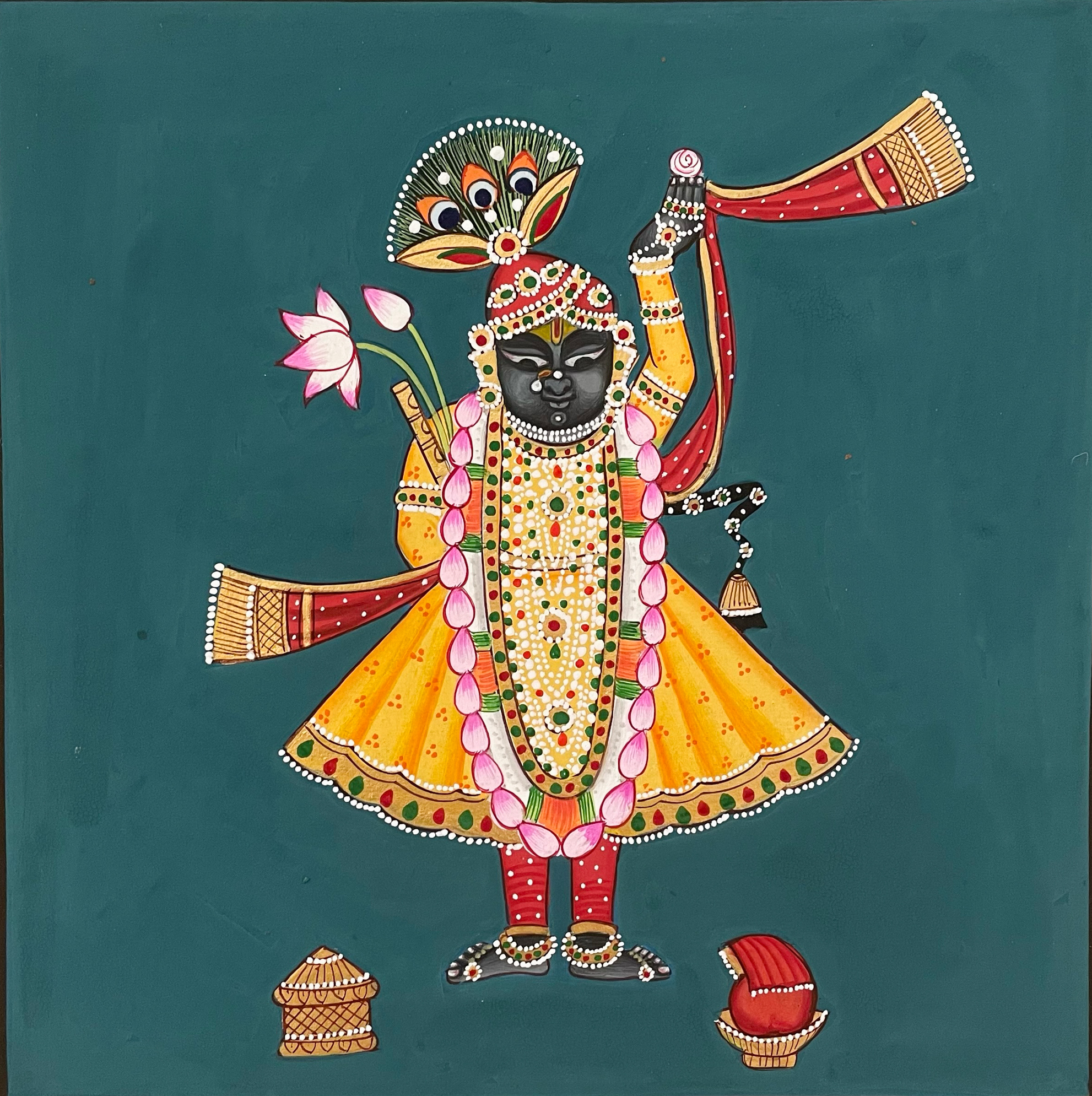
Srinathji, also known as Shrinathji, is a revered form of Lord Krishna worshiped in the Pushti Marg sect of Hinduism. The story of Srinathji is associated with the town of Nathdwara in Rajasthan, India. Here is a brief overview of the story of Srinathji:

1. Discovery of the Deity:
The story of Srinathji begins with the divine image of Lord Krishna. According to legend, the deity was originally enshrined in the temple of Govardhan Hill near Mathura. When the Mughal Emperor Aurangzeb started persecuting Hindu temples and deities, the idol of Lord Krishna was sent to Mewar, a region in present-day Rajasthan, to protect it from desecration.

2. Journey to Nathdwara:
During its journey, the idol stopped at the village of Sinhad (now known as Sihad), near Nathdwara. The villagers of Sinhad wanted to keep the deity in their village permanently, but the deity, through a series of miracles, indicated its desire to continue the journey. It was then placed in a chariot, and the villagers followed it. The chariot stopped near the present-day town of Nathdwara, and the deity manifested itself in a temple.

3. Establishing the Temple:
The temple in Nathdwara, known as the Shrinathji Temple, was constructed to house the deity. The temple was established by the Vaishnava saint Shri Vallabhacharya, who was a proponent of the Pushti Marg (Path of Grace) tradition. This tradition emphasizes devotion and grace in the worship of Lord Krishna.

4. Daily Rituals:
In the temple, Lord Srinathji is worshiped with great devotion and elaborate rituals. The deity is adorned with different outfits and jewelry at various times of the day, and devotees offer food offerings (bhog) to the deity. The temple has specific schedules for darshan (viewing) when devotees can have a glimpse of the deity.

5. The Unique Form:
What sets Srinathji apart is the deity’s unique form, often depicted as a seven-year-old “Lala” (child) Krishna. The deity stands with a raised right hand, which is believed to be a representation of Lord Krishna lifting the Govardhan Hill to protect the villagers from Lord Indra’s wrath. This form of Lord Krishna is known for its endearing and childlike expressions.

6. Festivals and Celebrations:
The temple at Nathdwara celebrates various festivals dedicated to Lord Srinathji with great enthusiasm. Janmashtami, the birth anniversary of Lord Krishna, is a major celebration. Annakut, a festival where a mountain of food offerings is prepared for the deity, is also celebrated with grandeur.

The story of Srinathji reflects the deep devotion and love of devotees for Lord Krishna and highlights the importance of grace and devotion in the Pushti Marg tradition of Hinduism. The temple in Nathdwara continues to be a significant pilgrimage site for Krishna devotees, attracting devotees from all over the world.

Image Credit: Eikowa