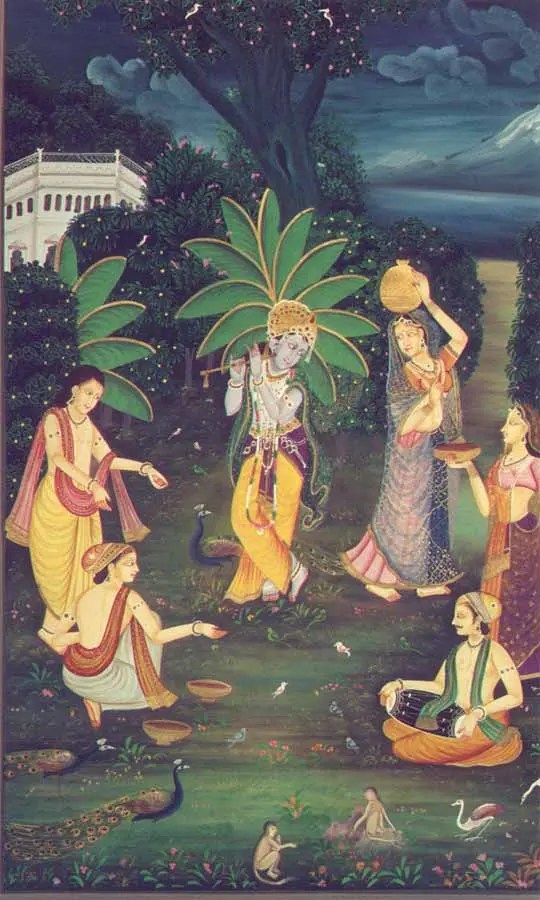
The Divine Dance: Krishna’s Rasleela with the Gopis

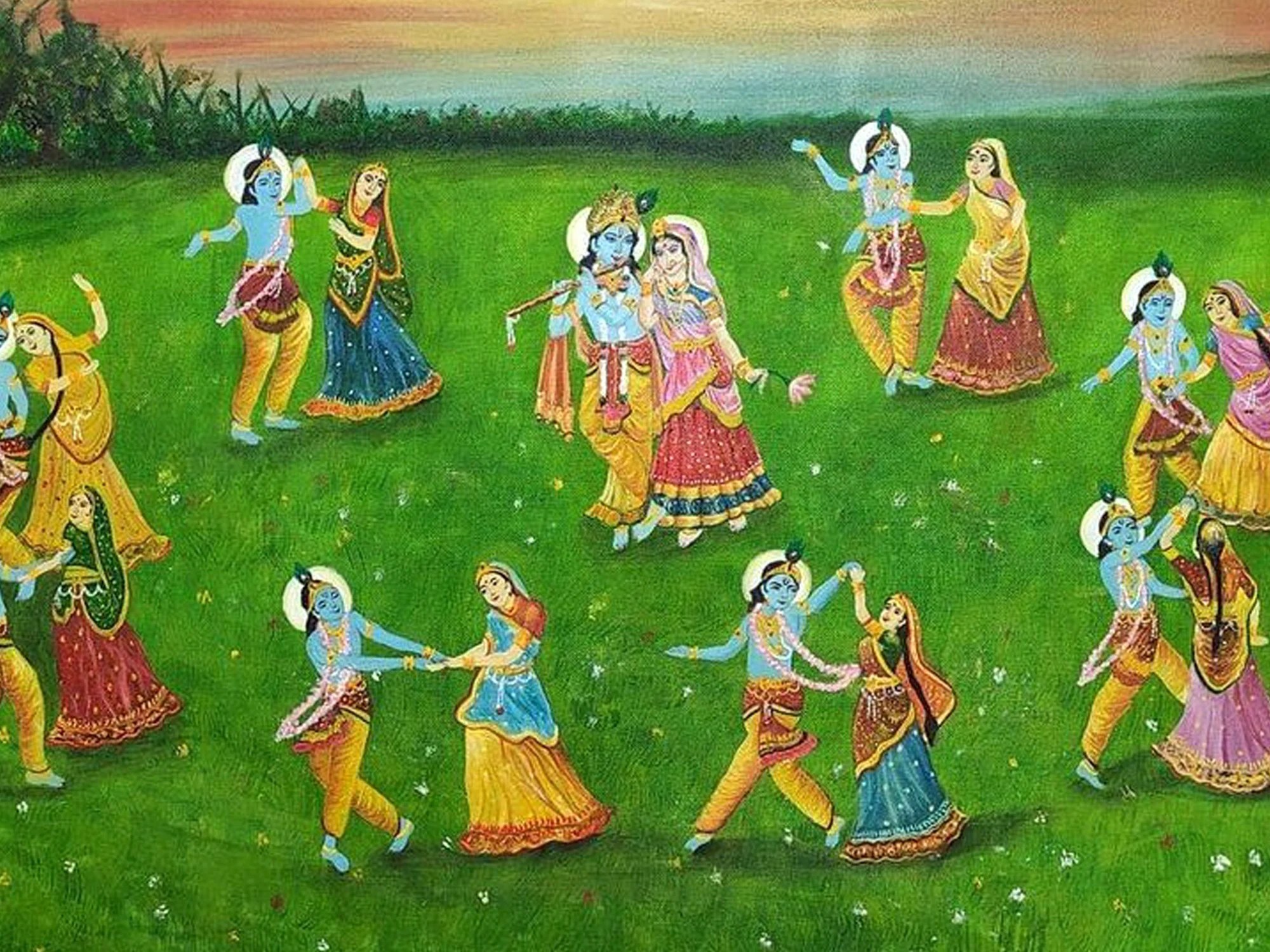
The “Rasleela” is a famous episode from Hindu mythology that is associated with Lord Krishna. It is a divine and highly symbolic dance that Krishna is believed to have performed with the Gopis (cowherd girls) in the forests of Vrindavan during his youth. The term “Ras” refers to the divine or transcendental essence, while “Leela” means play or pastime. So, Rasleela can be translated as the “divine play” or “divine dance.”

In the Rasleela, Lord Krishna would play his flute, and the melodious music would enchant the Gopis. They would be drawn to him irresistibly and would join him in a circle dance. The Rasleela is often depicted as a dance of pure, spiritual love and devotion, symbolizing the eternal love between the individual soul (Atma) and the divine (Paramatma).

There are several significant aspects of the Rasleela:

  1. Devotion and Surrender: The Gopis’ participation in the Rasleela represents the ideal of complete surrender and devotion to the divine. They abandon their worldly responsibilities to be with Krishna, symbolizing the idea that true devotion requires letting go of all attachments to material life.
  2. Universal Love: The Rasleela is often interpreted as a symbol of the universal love between God and all living beings. It transcends romantic love and represents the love that exists between the individual soul and the Supreme.
  3. The Dance of Divine Union: The Rasleela is seen as a metaphor for the union of the soul with the divine. In this dance, Krishna is the divine lover, and the Gopis are the devoted souls seeking union with God. It is a dance of the soul’s journey toward spiritual realization.
  4. Timelessness: In the Rasleela, it is said that time stands still. What seems like a single night to the Gopis actually spans the entirety of creation. This symbolizes the idea that divine love exists beyond the constraints of time and space.

The Rasleela is a deeply symbolic and spiritual aspect of Hindu mythology, emphasizing the importance of selfless devotion, surrender, and the eternal love between the individual soul and the divine. It is often celebrated and reenacted in various forms during Hindu festivals, especially during the festival of Holi in regions of India like Vrindavan and Mathura, where Krishna is believed to have performed these divine dances.

Image Credit: Exotic India Art
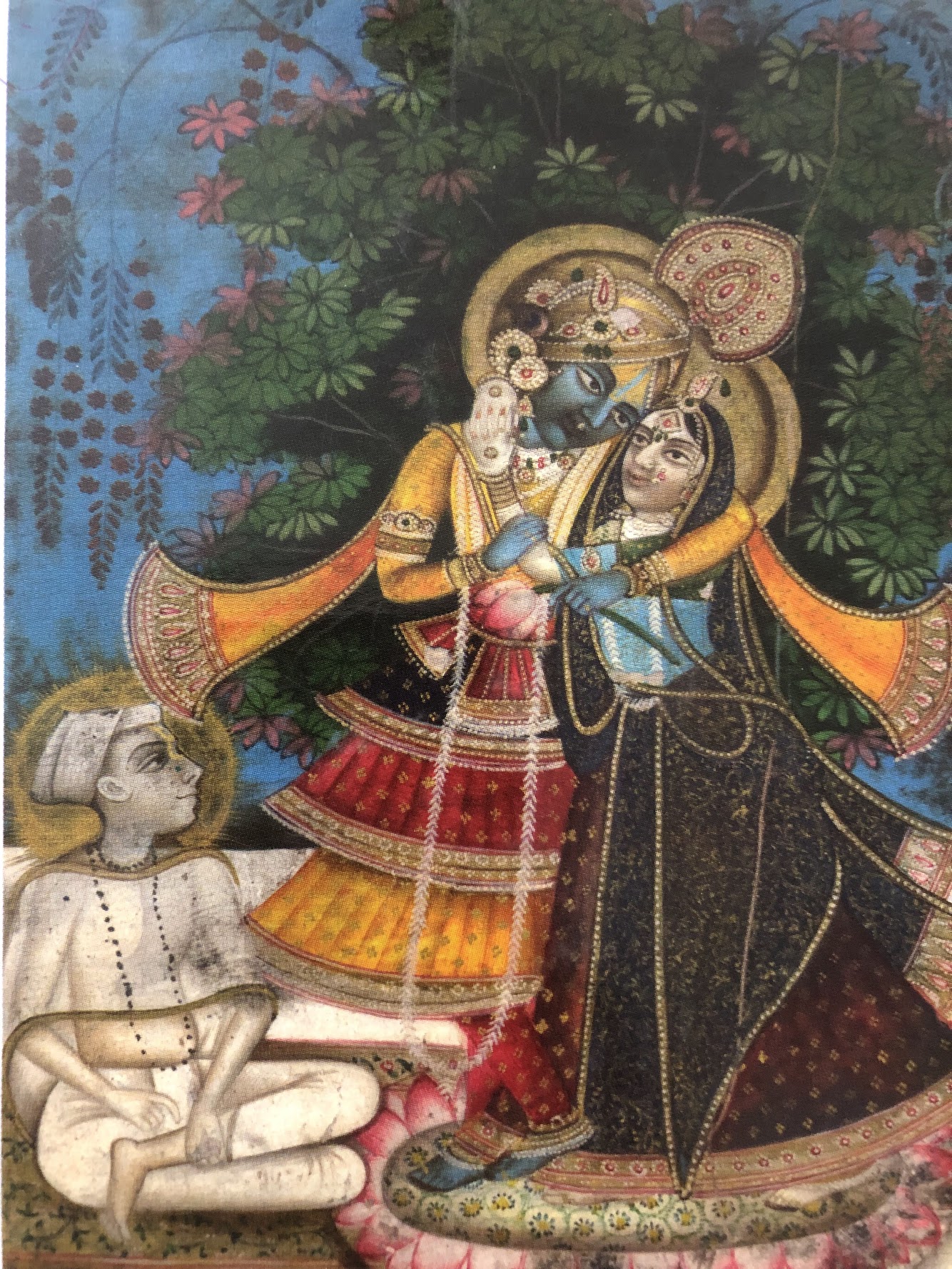
Hit Harivansha: An Ode to Divine Love – The Story of Radharani’s Devotee


The story of Hit Harivansha’s devotion to Radharani is a beautiful tale of love, devotion, and the transformative power of divine grace. Hit Harivansha was a 19th-century saint and poet who composed devotional songs and poetry dedicated to Radha and Krishna. Here’s a glimpse of his deep devotion:


Hit Harivansha was born in a small village in northern India. From a young age, he displayed a natural inclination toward spirituality and a deep love for Lord Krishna and His eternal consort, Radharani. His heart was always filled with the divine presence of Radha and Krishna.

As Hit Harivansha grew older, his love for Radharani deepened, and he felt a strong inner calling to express his devotion through poetry and song. He began composing devotional verses and bhajans (hymns) that celebrated the divine love between Radha and Krishna.

Hit Harivansha’s compositions were not mere words; they were heartfelt expressions of his love and longing for Radharani. His soulful singing and poetic verses touched the hearts of those who heard them, transporting them to the sacred land of Vrindavan, where Radha and Krishna’s divine love story unfolded.

One day, as Hit Harivansha was immersed in singing a bhajan dedicated to Radharani, something extraordinary happened. He felt an overwhelming presence, as if Radharani herself had descended to bless him. With tears of joy streaming down his face, he continued singing, feeling a deep union with his beloved deity.

News of Hit Harivansha’s divine encounter with Radharani spread throughout the region. Devotees and seekers from far and wide came to witness the power of his devotion and the grace of Radharani. They joined him in singing bhajans, and together, they experienced the divine ecstasy of Radharani’s love.

Hit Harivansha’s devotion to Radharani became legendary, and he continued to compose and sing devotional songs that touched the hearts of countless souls. His life was a living testament to the transformative power of devotion and the boundless love of Radha and Krishna.

To this day, Hit Harivansha’s devotional compositions are revered and sung by devotees around the world. His story serves as an inspiration for all who seek a deeper connection with the divine, reminding us that true devotion knows no boundaries and that the love of Radharani can elevate the soul to sublime heights of spiritual bliss.


The story of Hit Harivansha’s devotion to Radharani underscores the profound love and longing that devotees can experience in their relationship with the divine. It emphasizes the idea that sincere devotion can lead to divine encounters and experiences that transform one’s life.

The Divine Melody of Radha’s Love: Krishna’s Enchanting Flute


The story of Radha’s love for Lord Krishna and the enchanting allure of Krishna’s flute is a legendary tale that symbolizes the deepest form of divine love and spiritual longing. Here’s the story:

In the idyllic village of Vrindavan, Lord Krishna spent his youth as a playful and mischievous cowherd. Among his many admirers and devotees, Radha, the beautiful daughter of Vrishabhanu, stood out as his most beloved companion and soulmate.

Radha’s love for Krishna was unparalleled. Her heart and soul were completely immersed in devotion to him. Her love was pure, selfless, and unconditional. Radha’s beauty, grace, and devotion made her the embodiment of divine love.

Krishna, known for his enchanting flute playing, often played his melodious tunes in the forests of Vrindavan. His flute had a magical quality that could captivate anyone who heard its music. The sound of Krishna’s flute was said to be an expression of his love and an invitation to the souls of his devotees.

One day, as Radha heard the celestial music of Krishna’s flute drifting through the forest, she was overwhelmed with love and longing. She left her home and her worldly duties behind and followed the melodious strains of Krishna’s flute into the depths of the forest.

Deep within the woods, Radha finally found Krishna playing his flute with divine grace. Their eyes met, and in that sacred moment, they experienced a union of souls. Radha’s love for Krishna was so pure and deep that it transcended the physical world, and their love became a symbol of the highest form of spiritual love and devotion.

Radha’s love for Krishna and her longing to be with him are often portrayed through poetry, music, and art in Hindu culture. The story of Radha’s love for Krishna’s flute is a symbol of the soul’s yearning for divine union and the profound love that exists between the devotee and the divine.

This tale of Radha’s love for Krishna’s flute beautifully illustrates the transformative power of divine love and the soul’s journey to reunite with the divine through unwavering devotion and longing.

image credit: https://www.exoticindiaart.com/product/paintings/flute-of-krishna-wa16/