Eternal Bonds of Love: Radharani and Lalita Sakhi


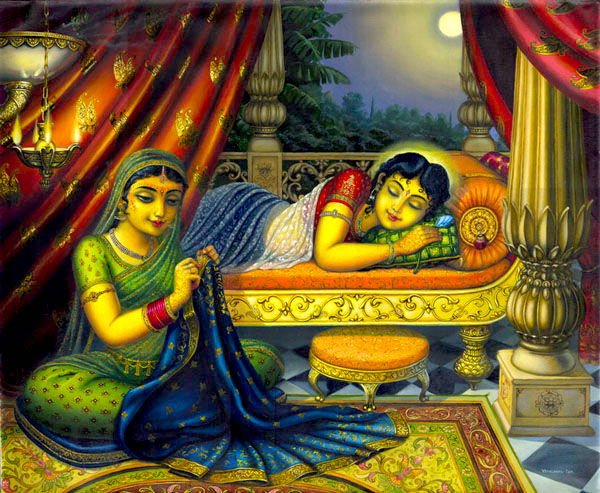
In the mystical land of Vrindavan, where every moment was drenched in devotion and love, there lived a beautiful and ethereal maiden named Radharani. She was not just any maiden, but the beloved consort of Lord Krishna, the enchanting flute-playing deity who stole the hearts of all who gazed upon him.

Radharani was not alone in her love for Krishna. She was always accompanied by her closest and dearest friend, Lalita Sakhi. Lalita was not just a friend; she was a confidante, a sister of the heart, and one of the chief gopis (cowherd girls) who assisted Radharani in her divine love play with Krishna.

Their friendship was unlike any other. Radharani was known for her unmatched beauty, her eyes like lotus petals, and her love for Krishna, which burned brighter than a thousand suns. Lalita, on the other hand, possessed an unparalleled wit and a sharp tongue that made her the perfect companion for Radharani. Together, they would engage in playful banter, laughter, and deep conversations as they prepared for their meetings with Krishna.

One day, Radharani expressed her longing to see Krishna. Her heart ached for his presence, and she couldn’t wait any longer. Lalita, with her quick thinking, devised a plan to reunite Radharani with her beloved.

“Dearest Radharani,” Lalita said, “I have an idea that will bring you closer to Krishna. Let’s organize a grand Raas Leela, where you and Krishna can dance together under the moonlit sky. Your love will be a spectacle for all of Vrindavan to witness.”

Radharani’s eyes sparkled with joy at the thought. The two friends worked tirelessly to arrange the Raas Leela. They decorated the forest with fragrant flowers, illuminated the paths with countless lamps, and prepared melodious music to enchant Krishna.

As the Raas Leela began, Radharani and Krishna’s eyes met, and their hearts leaped with joy. They danced together in perfect harmony, their love radiating like the brightest star in the sky. Lalita and the other gopis joined in the dance, creating a mesmerizing spectacle that captivated the entire universe.

But Lalita had one more surprise in store. She whispered to Krishna, “Dear Lord, take Radharani to the secluded bower we prepared. There, you can share moments of pure love and intimacy.”

Krishna smiled at Lalita’s wisdom and took Radharani to the secluded bower. There, in the embrace of the moonlight and the fragrant flowers, Radharani and Krishna shared their most profound moments of love and devotion.

Lalita Sakhi, always the faithful friend, stood guard to ensure their privacy. Her heart was filled with joy, for she knew that the union of Radharani and Krishna was the very essence of divine love.

The bond between Radharani and Lalita Sakhi was not just one of friendship; it was a sacred partnership in the eternal love story of Radha and Krishna. Their love and devotion continue to inspire devotees to this day, reminding us of the profound and boundless love that exists in the realm of the divine.

The Divine Bond: Radharani and Her Asthasakhis – Guardians of Eternal Love


The story of Radharani and her Asthasakhis, also known as the eight principal companions, is a beautiful and cherished part of Hindu mythology, particularly in the context of Lord Krishna’s divine pastimes in Vrindavan. These eight sakhis are the closest confidantes and friends of Radharani and play a central role in facilitating the divine love between Radha and Krishna.

Here’s a glimpse of their story:


In the enchanting forests of Vrindavan, the love between Radharani and Lord Krishna bloomed like an eternal garden of divine affection. Radharani, with her unparalleled beauty, grace, and devotion, was the quintessential embodiment of divine love. Her love for Krishna transcended all worldly boundaries.

The Asthasakhis, or the eight principal companions of Radharani, were her dearest friends, confidantes, and partners in the divine pastimes of Radha and Krishna. These eight sakhis were Lalita, Vishakha, Chitra, Champakalata, Tungavidya, Indulekha, Rangadevi, and Sudevi.

Each Asthasakhi had unique qualities and talents that complemented the divine play of Radha and Krishna:

  1. Lalita: Lalita was the chief of the sakhis, known for her deep understanding of the intricacies of Radha and Krishna’s love. She played a crucial role in mediating their love quarrels and facilitating their union.
  2. Vishakha: Vishakha was Radha’s close friend and was known for her eloquence. She often engaged in playful banter with Krishna and helped convey Radha’s messages to him.
  3. Chitra: Chitra was an artist who captured the divine beauty of Radha and Krishna through her paintings and drawings. She immortalized their love through her art.
  4. Champakalata: Champakalata was a culinary expert who delighted Radha and Krishna with her delicious preparations. Her cooking added flavor to their divine meetings.
  5. Tungavidya: Tungavidya was a talented musician who enchanted Radha and Krishna with her melodious songs and dances.
  6. Indulekha: Indulekha was an expert in preparing fragrant and beautiful flower garlands for Radha and Krishna, enhancing the charm of their meetings.
  7. Rangadevi: Rangadevi was skilled in arranging and decorating the secret meeting places of Radha and Krishna, creating an enchanting atmosphere for their rendezvous.
  8. Sudevi: Sudevi was known for her discretion and played a vital role in maintaining the confidentiality of Radha and Krishna’s divine love.

Together, these Asthasakhis supported Radharani in her love for Krishna. They were the guardians of her love, ensuring that it remained pure and divine. They arranged secret meetings, conveyed messages, and offered their unwavering support in the eternal love story of Radha and Krishna.

The story of Radharani and her Asthasakhis is a timeless celebration of divine love, friendship, and devotion. Their collective love for Lord Krishna and their dedication to Radharani exemplify the boundless love that permeates the spiritual realm of Vrindavan, where every moment is a celebration of love in its purest form.


The Divine Dance: Krishna’s Rasleela with the Gopis

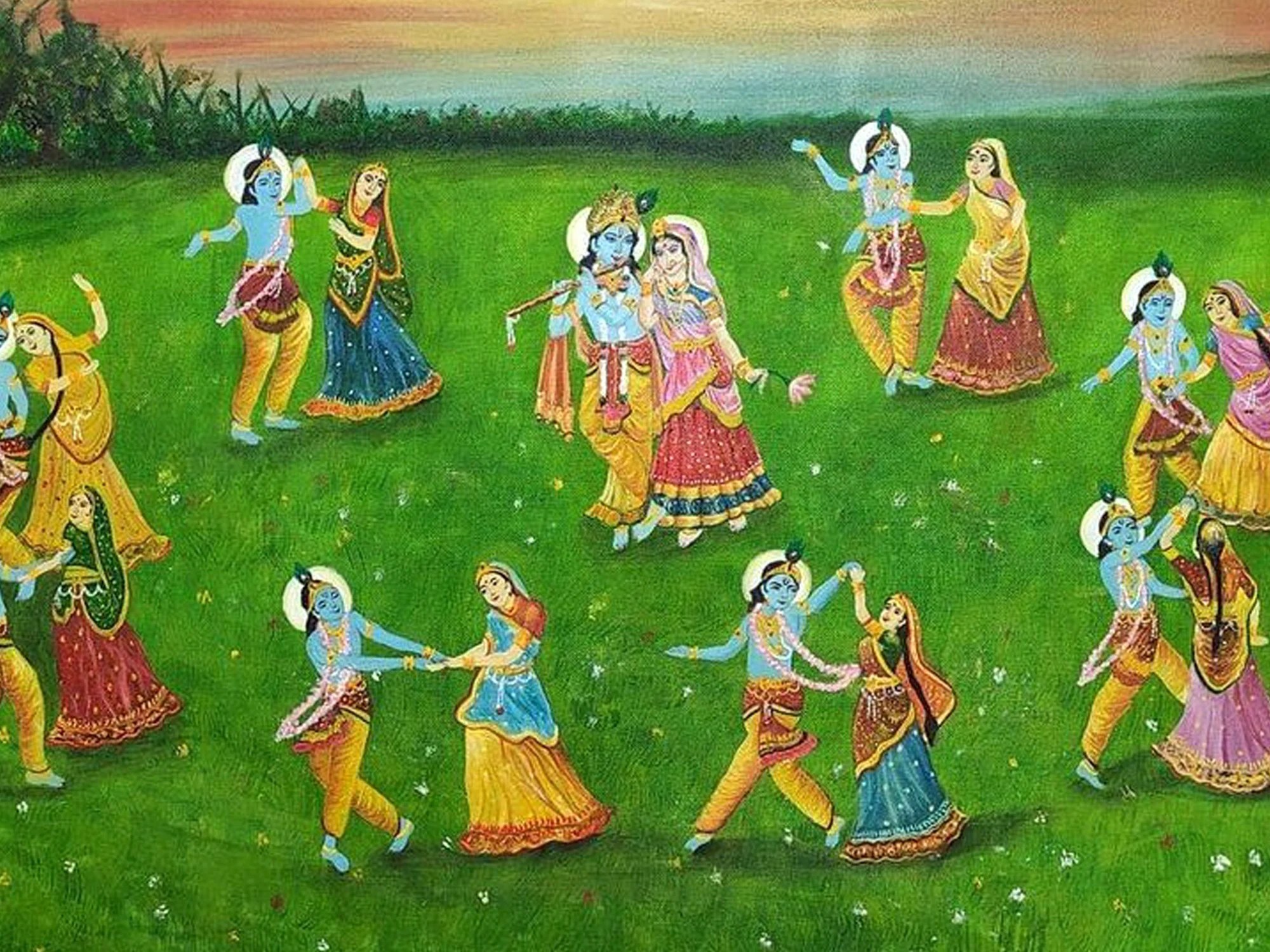
The “Rasleela” is a famous episode from Hindu mythology that is associated with Lord Krishna. It is a divine and highly symbolic dance that Krishna is believed to have performed with the Gopis (cowherd girls) in the forests of Vrindavan during his youth. The term “Ras” refers to the divine or transcendental essence, while “Leela” means play or pastime. So, Rasleela can be translated as the “divine play” or “divine dance.”

In the Rasleela, Lord Krishna would play his flute, and the melodious music would enchant the Gopis. They would be drawn to him irresistibly and would join him in a circle dance. The Rasleela is often depicted as a dance of pure, spiritual love and devotion, symbolizing the eternal love between the individual soul (Atma) and the divine (Paramatma).

There are several significant aspects of the Rasleela:

  1. Devotion and Surrender: The Gopis’ participation in the Rasleela represents the ideal of complete surrender and devotion to the divine. They abandon their worldly responsibilities to be with Krishna, symbolizing the idea that true devotion requires letting go of all attachments to material life.
  2. Universal Love: The Rasleela is often interpreted as a symbol of the universal love between God and all living beings. It transcends romantic love and represents the love that exists between the individual soul and the Supreme.
  3. The Dance of Divine Union: The Rasleela is seen as a metaphor for the union of the soul with the divine. In this dance, Krishna is the divine lover, and the Gopis are the devoted souls seeking union with God. It is a dance of the soul’s journey toward spiritual realization.
  4. Timelessness: In the Rasleela, it is said that time stands still. What seems like a single night to the Gopis actually spans the entirety of creation. This symbolizes the idea that divine love exists beyond the constraints of time and space.

The Rasleela is a deeply symbolic and spiritual aspect of Hindu mythology, emphasizing the importance of selfless devotion, surrender, and the eternal love between the individual soul and the divine. It is often celebrated and reenacted in various forms during Hindu festivals, especially during the festival of Holi in regions of India like Vrindavan and Mathura, where Krishna is believed to have performed these divine dances.

Image Credit: Exotic India Art