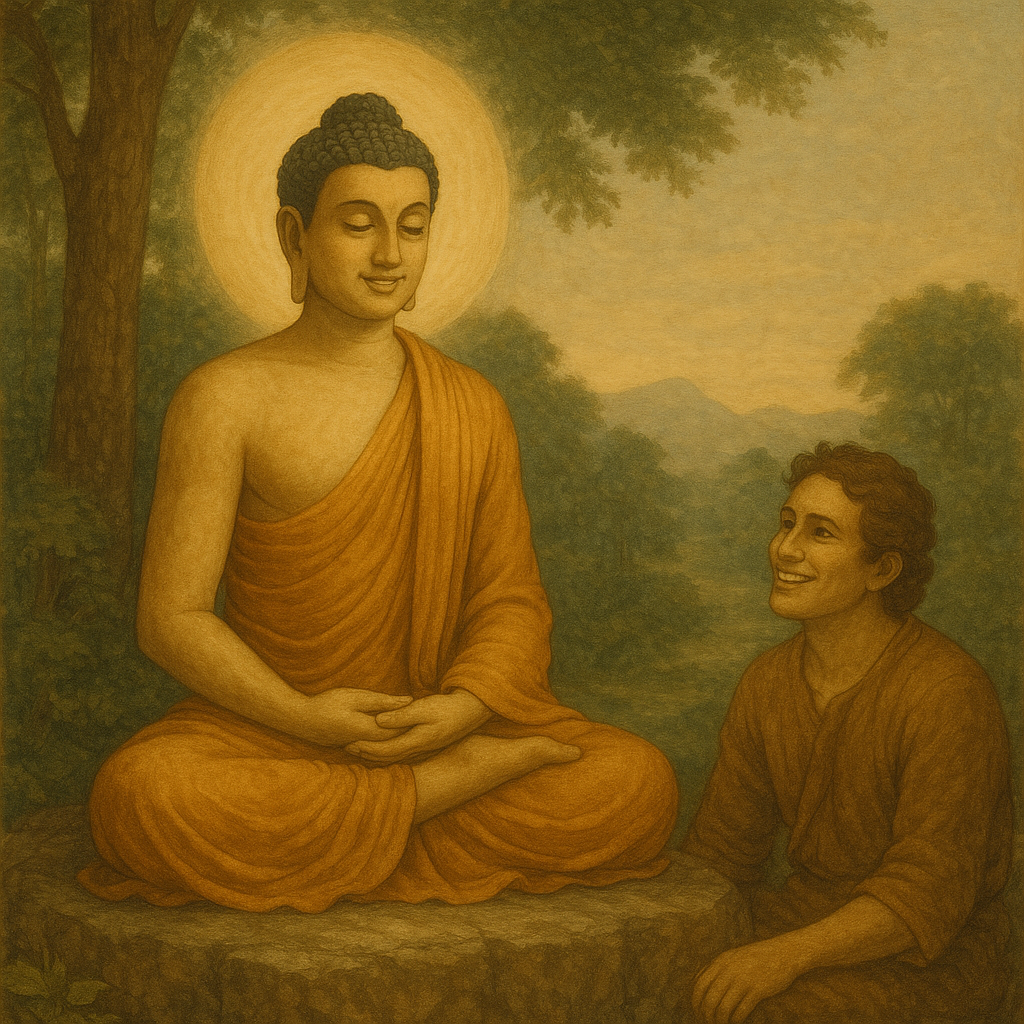
Buddha and the Journey of Self-Discovery


The journey of self-discovery has fascinated seekers across cultures and centuries. But perhaps no figure embodies this path more fully than the Buddha. His story is not simply about the founding of a religion—it is the universal human journey of awakening to one’s true nature. In exploring the life and teachings of Buddha, we uncover timeless wisdom for our own search for meaning, peace, and authenticity.

The Seed of Self-Discovery: Dissatisfaction with the Ordinary

Siddhartha Gautama, who would later become the Buddha, began life as a prince surrounded by luxury, comfort, and worldly success. Yet, when he stepped beyond the palace walls, he confronted life’s harsh realities—sickness, aging, and death.

This recognition of dukkha (suffering or dissatisfaction) became the spark of his inner quest. In the same way, many of us begin our self-discovery journeys when we sense that something is missing, no matter how “successful” or “comfortable” life may appear. Dissatisfaction becomes the doorway to deeper inquiry.

Beyond Roles and Identities

As a prince, husband, and father, Siddhartha had every worldly role. But he realized that these identities could not answer the deepest questions: Who am I? Why is there suffering? What is the purpose of existence?

True self-discovery often requires courage to look beyond the masks we wear—professional titles, family roles, cultural identities—and ask: What is my essence beyond labels? This peeling away of identities is not abandonment but recognition of something more fundamental that lies beneath.

Turning Inward: The Inner Path

Instead of blaming external circumstances, Siddhartha turned inward. Through meditation, reflection, and discipline, he sought answers not from scriptures or teachers alone, but from direct experience.

This is the essence of self-discovery: the willingness to turn the searchlight inward. It is not about collecting more information, but about cultivating awareness and observing the mind. Meditation becomes the mirror through which we see ourselves clearly.

The Middle Way: Balance in the Quest

In his early quest, Siddhartha explored extremes—lavish luxury in the palace and harsh asceticism in the forest. Neither brought liberation. What he realized is what we now call the Middle Way: a path of balance, moderation, and inner harmony.

For modern seekers, this is a powerful lesson. Self-discovery is not about renouncing life nor about overindulgence. It is about balance—integrating spiritual awareness with daily living, compassion with wisdom, and presence with purpose.

Awakening to Impermanence

One of Buddha’s greatest insights was impermanence (anicca). Everything—emotions, possessions, relationships, even our bodies—is transient. Clinging to them causes suffering, while acceptance of their impermanence brings freedom.

In our own journey of self-discovery, realizing impermanence liberates us from fear of loss. Instead of grasping, we learn to flow with life. This acceptance does not mean passivity; it means living fully in the present, without being enslaved by what we cannot hold.

Beyond the Ego: Who Am I Really?

Perhaps the most radical teaching of Buddha was anatta—the doctrine of “no fixed self.” What we call “self” is not an eternal, unchanging entity, but a stream of experiences, thoughts, and sensations.

Self-discovery here does not mean strengthening the ego-identity, but going beyond it. The true discovery is not “I am this or that” but awakening to the awareness that observes all experiences. This perspective dissolves the boundaries between “me” and “the world,” opening the door to compassion and interconnectedness.

The Practical Path of Discovery: The Eightfold Way

Buddha’s self-discovery was not an abstract philosophy—it was a lived path. His Eightfold Path offers a practical guide for seekers:

  1. Right Understanding – Seeing reality clearly.
  2. Right Intention – Aligning the heart with truth and compassion.
  3. Right Speech – Speaking with honesty and kindness.
  4. Right Action – Living ethically and authentically.
  5. Right Livelihood – Choosing work that does not harm and supports integrity.
  6. Right Effort – Cultivating discipline and positive states of mind.
  7. Right Mindfulness – Remaining present and aware.
  8. Right Concentration – Deep meditation leading to insight.

The Timeless Relevance of Buddha’s Journey

Each of these steps is a gateway into deeper layers of self-discovery, integrating wisdom into daily life.Today, amidst the noise of modern life, the Buddha’s journey resonates more than ever. We live surrounded by distractions, identities, and pressures that often pull us away from ourselves. His example reminds us that the ultimate answers are not “out there,” but within.

Self-discovery is not a luxury for the few; it is the path of every human being seeking peace, clarity, and authentic living. By following the Buddha’s insights—balance, impermanence, compassion, and inner awareness—we too can awaken to our deeper nature.

Closing Reflection

The story of Buddha is not just a story of the past—it is a mirror for us today. It tells us:

  • The dissatisfaction you feel is not a weakness, but a doorway.
  • You are more than your roles and labels.
  • Balance, not extremes, brings wisdom.
  • Impermanence is not a curse, but liberation.
  • The true self is not ego, but pure awareness.

In this sense, Buddha’s awakening is the universal map of self-discovery. Each of us, in our own way, is walking the same path—seeking truth, seeking freedom, seeking to discover who we truly are.
Self-Discovery Through the Eyes of Lord Krishna


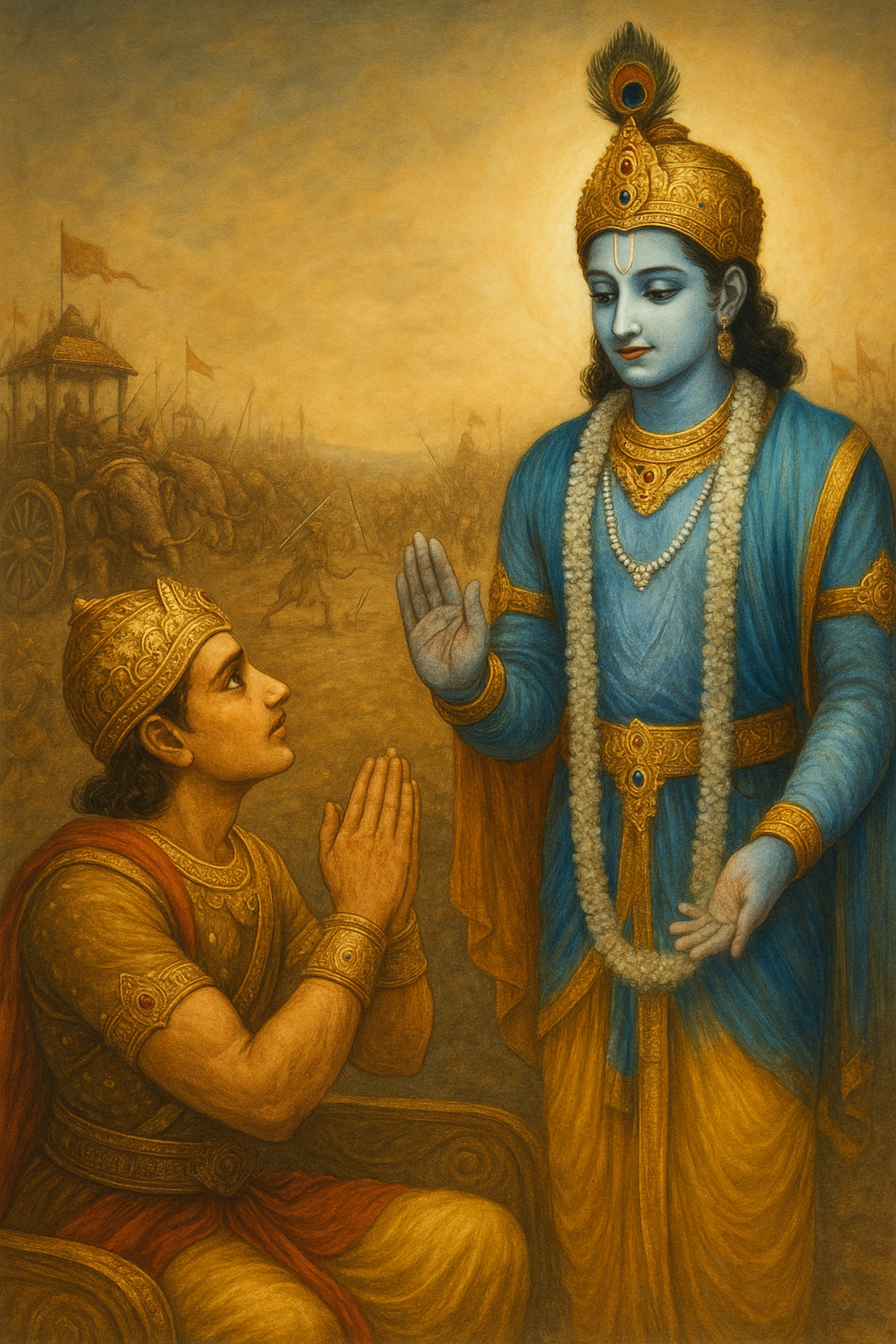
Self-discovery has become a modern buzzword. We seek it in books, travel, therapy, or even in quiet moments of reflection. Yet thousands of years ago, on the battlefield of Kurukshetra, Lord Krishna gave humanity a roadmap for true self-discovery through the timeless dialogue of the Bhagavad Gita.

What makes Krishna’s wisdom unique is that it is not abstract or detached—it is deeply human, delivered in the midst of war, doubt, and confusion. To understand self-discovery through Krishna is to recognize that the journey inward is not an escape from life, but a deeper engagement with it.

The Battlefield Within

Arjuna’s struggle was not only about facing his enemies; it was about facing himself. He was torn between duty and emotion, clarity and despair. Krishna reminds him—and us—that the greatest battlefield is often internal.

Everyday decisions, moral dilemmas, and emotional battles are our Kurukshetras. The discovery of the self begins not when we avoid these battles, but when we stand firm within them, guided by higher wisdom.

Peeling Back the Layers of Identity

Krishna emphasizes that we are not just our roles, titles, or even our bodies. These are temporary. The true self (ātman) is eternal, beyond birth and death.

  • The body is the outer garment.
  • The mind and emotions are like flowing rivers—powerful but ever-changing.
  • The self is the still observer, unchanging and divine.

Self-discovery, in Krishna’s language, is the art of realizing this eternal dimension.

Four Paths to Self-Realization

Krishna does not prescribe a single way. Instead, he outlines different approaches, knowing that each soul is unique:

  • Jnana Yoga (Path of Knowledge): Realizing the difference between the eternal self and the temporary body-mind.
  • Karma Yoga (Path of Action): Acting wholeheartedly in the world, but without clinging to results.
  • Bhakti Yoga (Path of Devotion): Surrendering the ego through love of the divine.
  • Dhyana Yoga (Path of Meditation): Steadying the restless mind to glimpse the inner truth.

Each path is a mirror for self-discovery. Some may resonate more with devotion, others with action or meditation—but all converge in the same truth.

Discovery Through Relationship

Arjuna did not find answers alone. He found them in dialogue with Krishna. This reminds us that self-discovery is not always solitary. It unfolds in relationships—with mentors, with loved ones, with the divine presence within us.

Krishna himself says: “I am seated in everyone’s heart.” To discover the self, we must also recognize the spark of Krishna in others.

Bringing Krishna’s Wisdom into Daily Life

Self-discovery is not meant to remain in scripture; it is a living practice. A few ways to bring it into your own life:

  • Pause before decisions: Ask, “Am I acting from ego or from dharma (higher duty)?”
  • Practice detachment: Do your work fully, then let go of the outcome.
  • Cultivate devotion: Through prayer, mantra, or simple gratitude.
  • Meditate daily: Even 10 minutes of stillness brings clarity.

The Ultimate Realization

At the heart of Krishna’s teaching is this: the true self is divine, eternal, and one with the whole. To know this is to be free from fear, free from doubt, and free from the endless chase for external validation.

Self-discovery, then, is not about becoming someone new. It is about remembering who we already are.

Closing Thought

In the Bhagavad Gita, Arjuna’s self-discovery was not separate from his duty, his struggle, or his relationships—it was discovered through them, guided by Krishna.

Perhaps that is the greatest lesson: the self is not found by escaping life, but by living it with awareness, courage, and devotion.

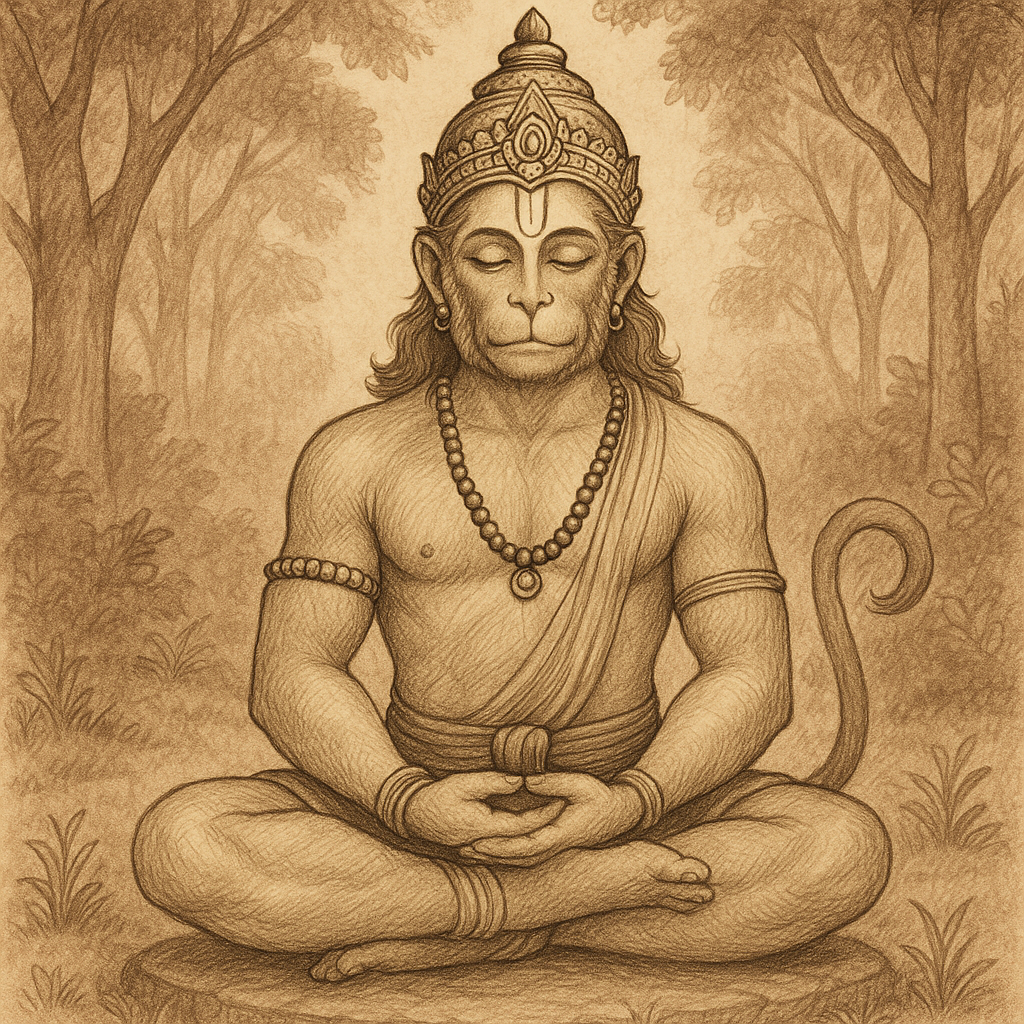
Self-Discovery Through the Story of Hanuman

Self-discovery is the process of realizing who we truly are beyond our doubts, fears, and limitations. Often, we look outside for strength and validation, forgetting that immense power already resides within us. One of the greatest illustrations of this truth comes from the story of Hanumanji in the Ramayana.

Hanumanji’s Forgotten Power

When Hanumanji was young, he once attempted to swallow the Sun, mistaking it for a ripe fruit. His divine strength was so immense that even the gods were shaken. To protect the universe, sages placed a curse upon him: he would forget his own powers until someone reminded him of them.

Years later, during the war against Ravana, the Vanara army stood at the seashore, unable to reach Lanka. The question was: Who will cross the ocean? Everyone looked hesitant. It was then that Jambavan gently reminded Hanuman of his true nature — that he was no ordinary being but a son of Vayu (the Wind God), filled with limitless potential.

The moment Hanumanji remembered his real strength, he expanded into his boundless form, leapt across the ocean, and fulfilled his destiny.

The Lesson for Us

Hanumanji’s story is not just mythology; it’s a mirror for our own lives. Like him, we often forget our inner strengths due to self-doubt, fear, or the conditioning of society. We wait for external validation, while the truth is that the power to transform, to leap across our “oceans,” already lies within us.

Self-discovery begins with remembering who we are. Just as Jambavan reminded Hanumanji, we, too, sometimes need teachers, mentors, or even moments of silence and reflection to awaken the giant within.

Steps Toward Self-Discovery Inspired by Hanumanji

  1. Pause and Reflect: Spend time in stillness. Ask yourself, What am I capable of that I haven’t dared to attempt yet?
  2. Seek Reminders: Surround yourself with uplifting people, books, and practices that remind you of your strengths.
  3. Act with Faith: Once you recognize your inner power, take bold steps toward your goals, even if the ocean seems vast.
  4. Stay Humble: Like Hanuman, let your strength always be guided by devotion, humility, and service.

Closing Thought

The story of Hanumanji teaches us that self-discovery is not about acquiring new powers but about remembering the greatness already within. Each of us has a “sleeping Hanuman” inside, waiting for the right moment of awakening. When we discover that, no ocean is too wide, no mountain too high, and no dream too impossible.