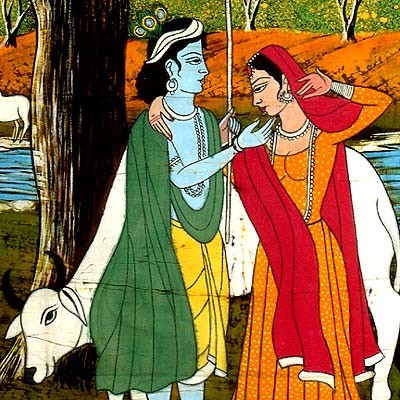
Radha Krishna (God & Goddess)

Radhe Krishna LoveRadha is the incarnation of the goddess Lakshmi, who is the wife of Vishnu. She is sometimes called “Radharani.” From childhood, she was very devoted to Krishna, who was also her foster brother. Though Radha and Krishna never married, her intense love for Krishna represents both the love a wife has for her husband and the love a devotee has for the divine. Since Radha and Krishna were children when they fell in love, their love for each other was very pure and spiritual, the ideal love. When Krishna left his childhood home behind in order to fulfill his destiny of killing Kamsa as well as having many other adventures, it is said that the continued affection Radha held for him helped give him strength.

Together, Radha and Krishna form a divine coupling to which married couples should aspire. Husbands should see their wives as Radha, the beloved, while women should look upon their husbands as Krishna. By pursuing the love of the divine, married couples can look beyond each other’s imperfections and find happiness serving each other, which prepares them in turn for serving the divine.

Though Krishna is the ultimate divine being, Radha is the Supreme Goddess. This is because while Krishna has power over all things, Radha, through his love for her, has control over him. This gives Radha a position of immense power. Without each other, however, they are meaningless: Krishna would not be Krishna without his beloved Radha, and Radha would be empty and lost without Krishna.

Roop Agadhey Radhey, Radhey Meri Radhey…
The beauty of Radha is boundless. My Radhey is wearing a golden crown studded with precious jewels. The glittering chandrika on Her crown is decorated with a fine chain of pearlsRadha Rani is wearing a red bindi on Her forehead and Her ears are adorned with ear-pendants. Her lotus eyes are decorated with collyrium and She looks very innocent. Radha is wearing a shiny nose ring and nose pearl in Her nose. Her sweet smile is heart-enticing. The fancy bracelets and rings on Her hands are fascinating and Her palms are decorated with henna. My Radhey is wearing an attractive blue blouse. Bead chains of sparkling pearls and precious gems are glorifying Her neck. She is wearing elegant bangles on Her wrists and Her delicate waist is decorated with an ornate waistband. Anklets are glorifying Her lotus feet and Her toes are bejeweled with cute little toe rings. Radhey’s toenails are glittering like ten precious jewels and Her lotus feet are decorated with javak (a liquid red color used to adorn the feet). Shree Kripaluji Maharaj says that the amazing Divine beauty of my Radhey is so fascinating that it entices the heart of Manmohan Krishn.

Karma Yoga

Karma Yoga

arjuna uvaca
jyayasi cet karmanas te
mata buddhir janardana
tat kim karmani ghore mam
niyojayasi kesava

SYNONYMS

arjunah–Arjuna; uvaca–said; jyayasi–speaking very highly; cet–although; karmanah–than fruitive action; te–Your; mata–opinion;buddhih–intelligence; janardana–O Krsna; tat–therefore; kim–why;karmani–in action; ghore–ghastly; mam–me; niyojayasi–engaging me;kesava–O Krsna.
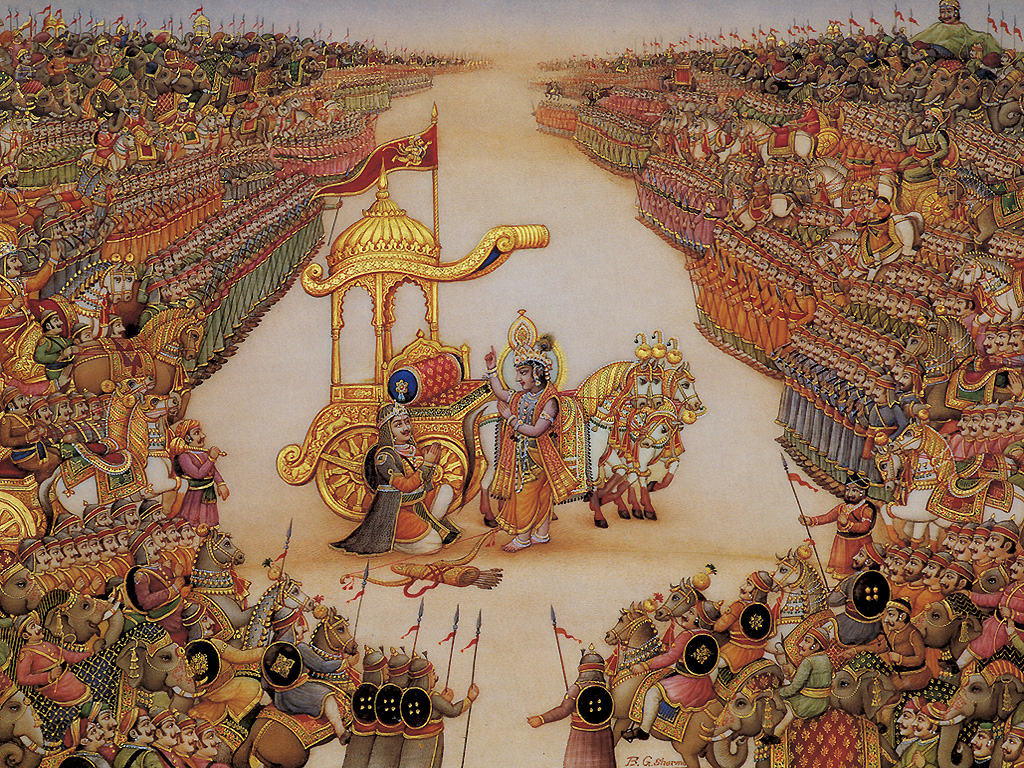
TRANSLATION

Arjuna said: O Janardana, O Kesava, why do You urge me to engage in this ghastly warfare, if You think that intelligence is better than fruitive work?

PURPORT

The Supreme Personality of Godhead Sri Krsna has very elaborately described the constitution of the soul in the previous chapter, with a view to deliver His intimate friend Arjuna from the ocean of material grief. And the path of realization has been recommended: buddhi-yoga, or Krsna consciousness. Sometimes Krsna consciousness is misunderstood to be inertia, and one with such a misunderstanding often withdraws to a secluded place to become fully Krsna conscious by chanting the holy name of Lord Krsna. But without being trained in the philosophy of Krsna consciousness, it is not advisable to chant the holy name of Krsna in a secluded place, where one may acquire only cheap adoration from the innocent public. Arjuna also thought of Krsna consciousness or buddhi-yoga, or intelligence in spiritual advancement of knowledge, as something like retirement from active life and the practice of penance and austerity at a secluded place. In other words, he wanted to skillfully avoid the fighting by using Krsna consciousness as an excuse. But as a sincere student, he placed the matter before his master and questioned Krsna as to his best course of action. In answer, Lord Krsna elaborately explained karma-yoga, or work in Krsna consciousness, in this Third Chapter.


Śrīmad-Bhāgavatam 3.1

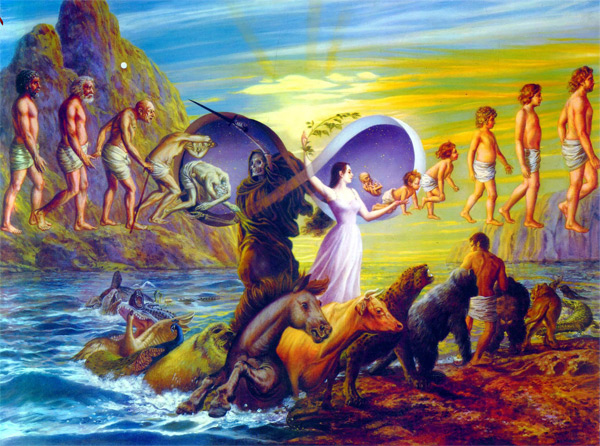
One who has taken birth, he must die.

INFINTIY BODIES

jatasya hi dhruvo mrtyur
dhruvam janma mrtasya ca
tasmad apariharye ‘rthe
na tvam socitum arhasi

SYNONYMS

jatasya–one who has taken his birth; hi–certainly; dhruvah–a fact;mrtyuh–death; dhruvam–it is also a fact; janma–birth; mrtasya–of the dead; ca–also; tasmat–therefore; apariharye–for that which is unavoidable; arthe–in the matter of; na–do not; tvam–you; socitum–to lament; arhasi–deserve.

TRANSLATION

For one who has taken his birth, death is certain; and for one who is dead, birth is certain. Therefore, in the unavoidable discharge of your duty, you should not lament.

PURPORT

One has to take birth according to one’s activities of life. And, after finishing one term of activities, one has to die to take birth for the next. In this way the cycle of birth and death is revolving, one after the other without liberation. This cycle of birth and death does not, however, support unnecessary murder, slaughter and war. But at the same time, violence and war are inevitable factors in human society for keeping law and order.
The Battle of Kuruksetra, being the will of the Supreme, was an inevitable event, and to fight for the right cause is the duty of a ksatriya.Why should he be afraid of or aggrieved at the death of his relatives since he was discharging his proper duty? He did not deserve to break the law, thereby becoming subjected to the reactions of sinful acts, of which he was so afraid. By avoiding the discharge of his proper duty, he would not be able to stop the death of his relatives, and he would be degraded due to his selection of the wrong path of action.


Śrīmad-Bhāgavatam 2.1.1