
In Indian Mythology, specifically the Bhagavata Purana, the narrative revolves around the divine incarnations and the clash with the demon king Hiranyakashipu. The story begins with the visit of the Kumaras, sons of Lord Brahma, to Vaikunth Loka to meet Lord Vishnu.

However, their meeting was obstructed by Jaya and Vijaya, the gatekeepers of Vaikuntha, who conveyed that Lord Vishnu was in a state of rest, believing that they were protecting their Lord from disturbance.
This incident infuriated the four Kumaras, leading them to curse the gatekeepers to be reborn as mortals on Earth and experience the suffering of ignorance. As a consequence, Jaya and Vijaya took birth as the sons of Diti and Sage Kashyap during the Satya Yuga.
The two brothers, Hiranyakashipu and Hiranyaksha, jointly referred to as the Hiranyas, grew up and embarked on distinct paths. Hiranyaksha engaged in relentless penance, ultimately seeking a boon that rendered him invulnerable. His specific conditions included being impervious to harm from any man, beast, deity, or demon, at all times of day or night, and in all locations, whether indoors, outdoors, on the earth, or in the sky.
Brahma, initially hesitant, granted this wish with the word “Tathastu” before vanishing.
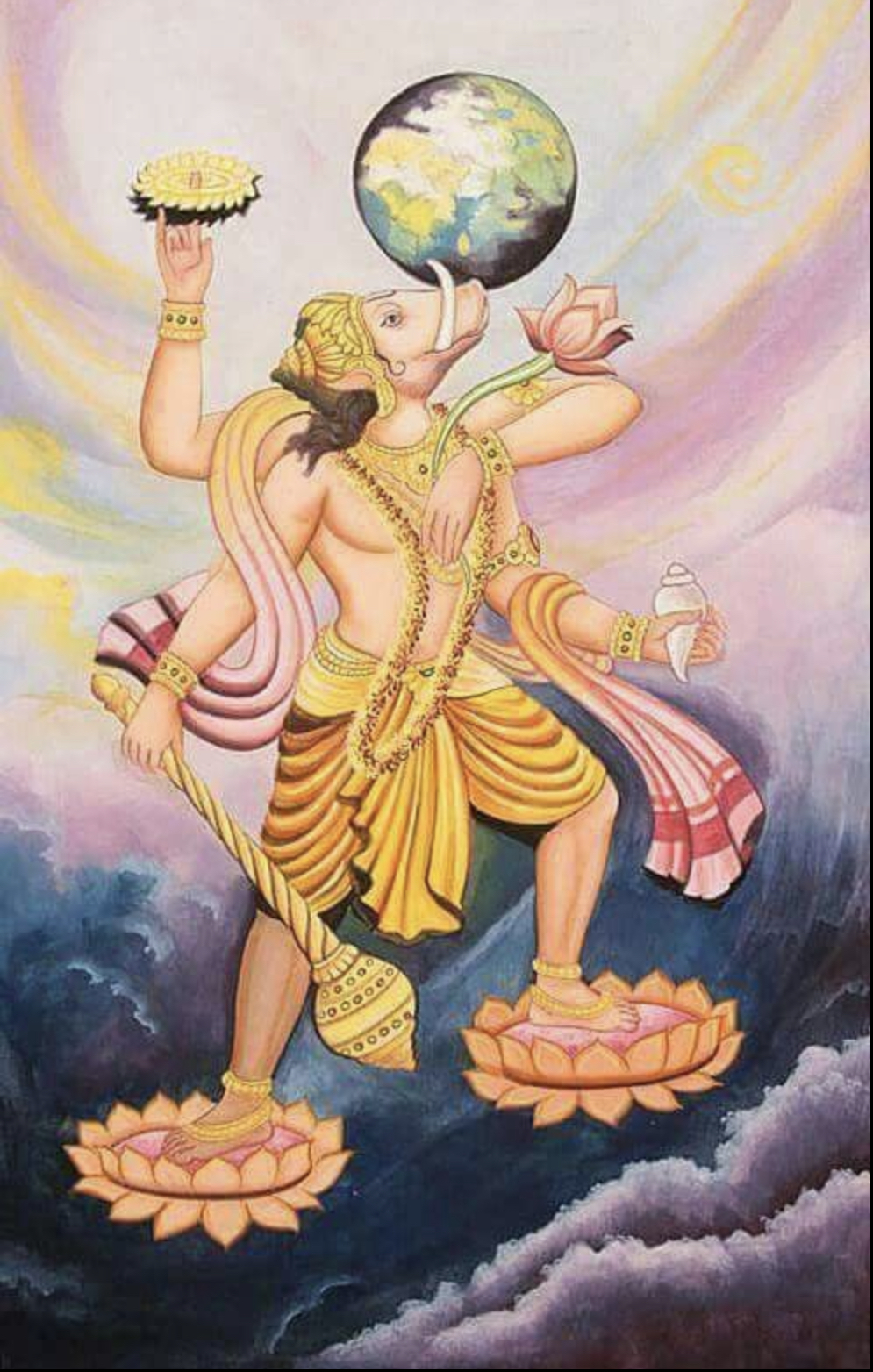
Simultaneously, Hiranyaksha, the younger sibling, initiated a reign of terror and chaos, tormenting humans, deities, and innocent beings. In response, the 33 Koti gods sought the aid of Lord Vishnu, who incarnated as Lord Varaha to eradicate the adharma caused by Hiranyaksha and restore balance to the Earth. An intense battle ensued between Varaha and Hiranyaksha, lasting a millennium, with Varaha emerging victorious and restoring the Earth’s stability.
Amidst these events, while Hiranyakashipu was engaged in severe penance to secure a boon from Lord Brahma, Indra seized the opportunity to attack his kingdom and destroy his residence, even attempting to abduct Queen Kayadhu, who was pregnant with a child.
Sage Narada intervened at this juncture, offering protection and guidance to Kayadhu and her unborn child, Prahlad. Prahlad, nurtured on stories of Lord Vishnu narrated by Narada, developed transcendent love for the Lord from a tender age.
Upon returning to his kingdom, Hiranyakashipu, keen to spend time with his son, discovered that Prahlad was fervently praising Lord Vishnu. Enraged, Hiranyakashipu subjected Prahlad’s teacher to punishment, unable to tolerate his son’s devotion to Lord Vishnu, whom he regarded as an adversary.
Hiranyakashipu’s subsequent attempts to influence Prahlad and turn him against Lord Vishnu proved fruitless. Frustrated, he ordered demons to crush his son beneath an elephant, but Prahlad emerged unscathed. They attempted various means, including poison, starvation, and enchantments, but Prahlad remained unharmed, protected by his unwavering devotion.
In a final bid to eliminate the devotee of his adversary, Hiranyakashipu sought the assistance of his sister, Holika, who possessed the ability to remain unharmed in fire. Holika was instructed to sit in the fire with Prahlad on her lap to incinerate him into ashes.
Unperturbed by the imminent danger, Prahlad chanted the name of Lord Vishnu, and as the flames intensified, he remained untouched, while Holika perished in the fire.
This episode gave rise to the tradition of Holika Dahan, observed the day before Holi.
Following these events, Prahlad refused to recognize Hiranyakashipu as his father and affirmed that Lord Vishnu was omnipresent. In a fit of rage, Hiranyakashipu pointed to a pillar in his palace and asked Prahlad if his Lord Vishnu was present there. To this, Prahlad confidently responded that the Lord was indeed present.
Incensed, Hiranyakashipu approached the pillar with his mace and struck it. The pillar shattered with a burst of light and a deafening roar, revealing the fearsome form of Lord Narasimha, a half-man, half-lion incarnation of Lord Vishnu. Narasimha appeared with disheveled hair, a formidable mustache, and menacing teeth, his claws resembling sharp blades poised to rend the demon into two.
Ferocious and unrestrained, Narasimha roared in anger, while the gods from heaven bore witness to the spectacle. Hiranyakashipu attempted to flee the palace to escape Narasimha’s wrath but was apprehended by the divine incarnation. Narasimha placed him on his thighs, neither on the earth nor in the sky, and eviscerated him with his razor-sharp claws.
Even after the demon’s demise, Narasimha remained uncalmed, impervious to the efforts of Lord Brahma, Lord Shiva, and Goddess Lakshmi to soothe his fury. It was only when Prahlad approached Narasimha, touched his feet, and requested a boon that the avatar’s anger subsided.
Prahlad, acknowledging Narasimha as his Lord, was granted the title of king and instructed to rule with devotion and righteousness. Humbly, Prahlad requested to be free from worldly desires, a wish Narasimha kindly granted.
Here is a list of some prominent Narasimha temples in India:
- Ahobilam Narasimha Temple, Andhra Pradesh: Ahobilam is one of the most significant Narasimha temples in India, with nine different forms of Lord Narasimha enshrined in the region.
- Singaperumal Koil, Tamil Nadu: This temple in Singaperumal Koil, near Chennai, is known for its deity, “Prahlada Varadar,” in a sitting posture.
- Simhachalam Narasimha Swamy Temple, Andhra Pradesh: Located in Visakhapatnam, this temple is renowned for its beautifully adorned deity of Lord Narasimha.
- Kadiri Lakshmi Narasimha Temple, Andhra Pradesh: Kadiri in Andhra Pradesh houses a temple dedicated to Lord Narasimha, and it’s a popular pilgrimage site.
- Narasimha Jharni, Karnataka: This cave temple is situated in Bidar, Karnataka, and is known for its natural springs and the idol of Lord Narasimha.
- Lakshmi Narasimha Temple, Nuggehalli, Karnataka: This Hoysala temple is famous for its exquisite architecture and the idol of Lord Narasimha.
- Yadagirigutta Narasimha Temple, Telangana: Located in Yadagirigutta, this temple is dedicated to Lord Lakshmi Narasimha.
- Karimnagar Narasimha Swamy Temple, Telangana: A prominent temple in the state of Telangana, it is dedicated to Lord Narasimha.
- Kalamalla Narasimha Swamy Temple, Telangana: Situated in Kalamalla, this temple is known for its beautiful idol of Lord Narasimha.
- Jwala Narasimha Temple, Samalkot, Andhra Pradesh: This temple is known for the fiery form of Lord Narasimha, and it’s located in Samalkot.
- Narasimha Temple, Sholingur, Tamil Nadu: Sholingur is home to two Narasimha temples on twin hills, collectively known as “Sholingur Ahobilam.”
- Bhadrachalam Narasimha Temple, Telangana: While Bhadrachalam is famous for Lord Rama, it also has a shrine dedicated to Lord Narasimha in the vicinity.
- Lower Ahobilam, Andhra Pradesh: This is one of the temples in the Ahobilam complex, known for its peaceful and serene surroundings.
- Sri Narasimha Swamy Temple, Simhanagadde, Karnataka: This ancient temple is located in the Hassan district of Karnataka and is dedicated to Lord Narasimha.
Please note that there are many more Narasimha temples in India, and this list provides just a glimpse of the diversity and significance of these temples across the country. Each temple has its unique history and significance in Hindu mythology and is worth visiting for devotees and those interested in Indian temple architecture and culture.
 Self Discovery
You must be logged in to post a comment.