
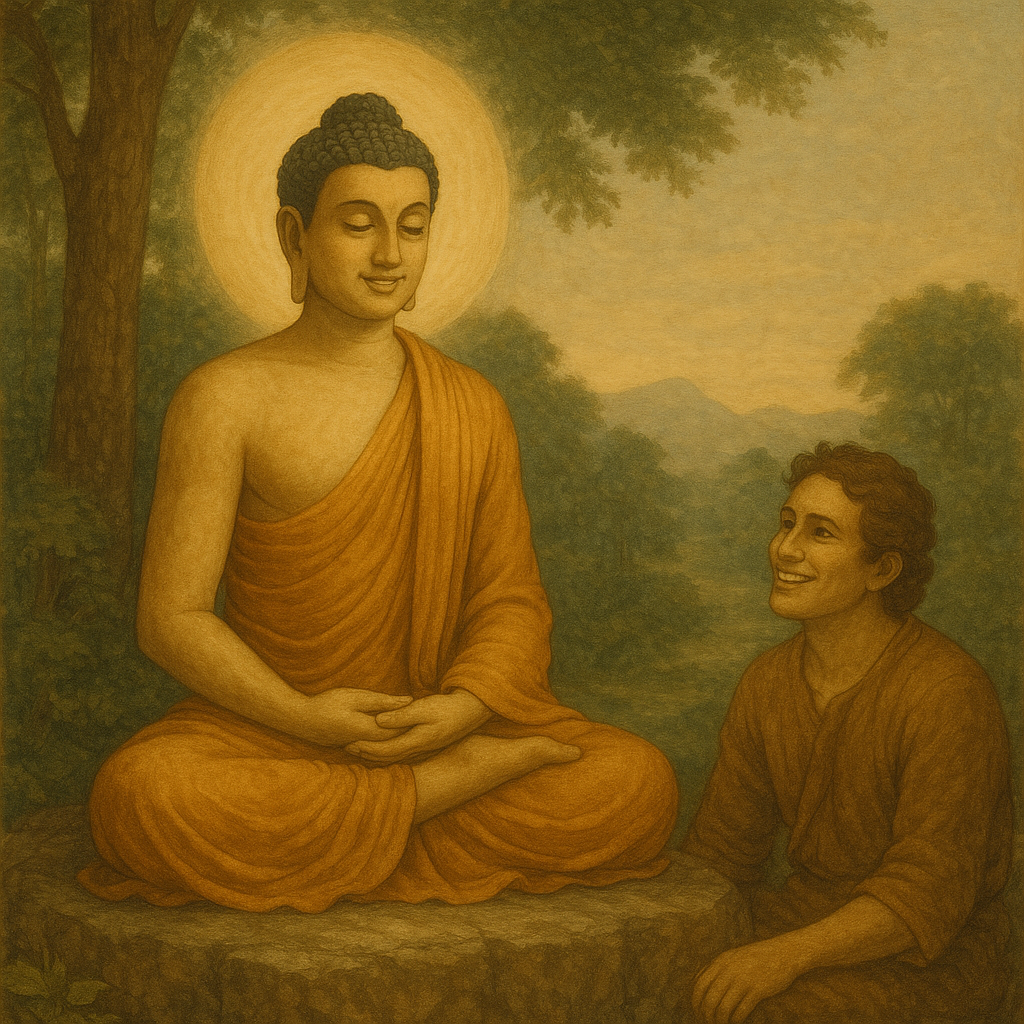
The journey of self-discovery has fascinated seekers across cultures and centuries. But perhaps no figure embodies this path more fully than the Buddha. His story is not simply about the founding of a religion—it is the universal human journey of awakening to one’s true nature. In exploring the life and teachings of Buddha, we uncover timeless wisdom for our own search for meaning, peace, and authenticity.
The Seed of Self-Discovery: Dissatisfaction with the Ordinary
Siddhartha Gautama, who would later become the Buddha, began life as a prince surrounded by luxury, comfort, and worldly success. Yet, when he stepped beyond the palace walls, he confronted life’s harsh realities—sickness, aging, and death.
This recognition of dukkha (suffering or dissatisfaction) became the spark of his inner quest. In the same way, many of us begin our self-discovery journeys when we sense that something is missing, no matter how “successful” or “comfortable” life may appear. Dissatisfaction becomes the doorway to deeper inquiry.
Beyond Roles and Identities
As a prince, husband, and father, Siddhartha had every worldly role. But he realized that these identities could not answer the deepest questions: Who am I? Why is there suffering? What is the purpose of existence?
True self-discovery often requires courage to look beyond the masks we wear—professional titles, family roles, cultural identities—and ask: What is my essence beyond labels? This peeling away of identities is not abandonment but recognition of something more fundamental that lies beneath.
Turning Inward: The Inner Path
Instead of blaming external circumstances, Siddhartha turned inward. Through meditation, reflection, and discipline, he sought answers not from scriptures or teachers alone, but from direct experience.
This is the essence of self-discovery: the willingness to turn the searchlight inward. It is not about collecting more information, but about cultivating awareness and observing the mind. Meditation becomes the mirror through which we see ourselves clearly.
The Middle Way: Balance in the Quest
In his early quest, Siddhartha explored extremes—lavish luxury in the palace and harsh asceticism in the forest. Neither brought liberation. What he realized is what we now call the Middle Way: a path of balance, moderation, and inner harmony.
For modern seekers, this is a powerful lesson. Self-discovery is not about renouncing life nor about overindulgence. It is about balance—integrating spiritual awareness with daily living, compassion with wisdom, and presence with purpose.
Awakening to Impermanence
One of Buddha’s greatest insights was impermanence (anicca). Everything—emotions, possessions, relationships, even our bodies—is transient. Clinging to them causes suffering, while acceptance of their impermanence brings freedom.
In our own journey of self-discovery, realizing impermanence liberates us from fear of loss. Instead of grasping, we learn to flow with life. This acceptance does not mean passivity; it means living fully in the present, without being enslaved by what we cannot hold.
Beyond the Ego: Who Am I Really?
Perhaps the most radical teaching of Buddha was anatta—the doctrine of “no fixed self.” What we call “self” is not an eternal, unchanging entity, but a stream of experiences, thoughts, and sensations.
Self-discovery here does not mean strengthening the ego-identity, but going beyond it. The true discovery is not “I am this or that” but awakening to the awareness that observes all experiences. This perspective dissolves the boundaries between “me” and “the world,” opening the door to compassion and interconnectedness.
The Practical Path of Discovery: The Eightfold Way
Buddha’s self-discovery was not an abstract philosophy—it was a lived path. His Eightfold Path offers a practical guide for seekers:
- Right Understanding – Seeing reality clearly.
- Right Intention – Aligning the heart with truth and compassion.
- Right Speech – Speaking with honesty and kindness.
- Right Action – Living ethically and authentically.
- Right Livelihood – Choosing work that does not harm and supports integrity.
- Right Effort – Cultivating discipline and positive states of mind.
- Right Mindfulness – Remaining present and aware.
- Right Concentration – Deep meditation leading to insight.
The Timeless Relevance of Buddha’s Journey
Each of these steps is a gateway into deeper layers of self-discovery, integrating wisdom into daily life.Today, amidst the noise of modern life, the Buddha’s journey resonates more than ever. We live surrounded by distractions, identities, and pressures that often pull us away from ourselves. His example reminds us that the ultimate answers are not “out there,” but within.
Self-discovery is not a luxury for the few; it is the path of every human being seeking peace, clarity, and authentic living. By following the Buddha’s insights—balance, impermanence, compassion, and inner awareness—we too can awaken to our deeper nature.
Closing Reflection
The story of Buddha is not just a story of the past—it is a mirror for us today. It tells us:
- The dissatisfaction you feel is not a weakness, but a doorway.
- You are more than your roles and labels.
- Balance, not extremes, brings wisdom.
- Impermanence is not a curse, but liberation.
- The true self is not ego, but pure awareness.
In this sense, Buddha’s awakening is the universal map of self-discovery. Each of us, in our own way, is walking the same path—seeking truth, seeking freedom, seeking to discover who we truly are.
 Self Discovery
You must be logged in to post a comment.