The Glories of Gopi-chandana Tilak

Gopi ChandanaPadma Purana explains that in one kalpa during Krishna’s Bhauma Vrndavana (earthly) pastimes, the Vraja-gopis went near Dvaraka to dance with their beloved in a secluded forest beside the sea. Krishna secretly left His palace, abandoned His royal insignias, robes, opulent crown and other trimmings of a King, and again adorned Himself in his gopa-vesh, simple dress of a Vrndavana cowherd boy, – with a red turban and peacock feather atop His head, a flowing lightning gold dhoti and diaphanous yellow chaddar, a yellow karnikara flower stuck above one ear, a gunja berry necklace swining from His neck, and of course that indomitable instrument of seduction and family destruction- His murali.

After hours of wonderful dancing and loving expressions, Krishna took the gopis to swim in a nearby lake to relieve their fatigue. All the body powders, unguents, oils and pastes of sandalwood, musk, jasmine, saffron and various colored minerals washed off their transcendental bodies as they splashed each other and played about. These fragrant substances filtered down through the water, and mixed in with the muddy clay at the bottom of the lake. By the touch of these divine substances all the clay became spiritualized and endowed with a sublime fragrance. For the last fifty centuries Visnu and Krishna bhaktas have been using THIS clay known as gopi chand (it is golden color just like Radhika’s splendid limbs), to apply tilaka to their bodies and write the names of Krishna or Radha across their chests or foreheads, which means “I am the property of Radha.”
The gopi-chand we are sending has been broken from a large chunk, soaked in water, and placed in a container to dry into a particular shape. You may again break it and use the odd shaped pieces to apply tilaka, or use the maha chunk.

Sastric References Regarding Benefit of Wearing General Tilaka, and special Dvarka Gopi-chand 

First we will give some quotes from one of our notebooks: Tilaka on the body acts to purify the body and indicates that our body is surrendered to Krishna. The particular places on the body where tilaka is applied are sensitive points (energy sensors) on the body which easily absorb the spiritual energy generated by reciting the transcendental names (Sri Visnu, Sri Visnave, Sri Govinda etc.) and mentally placing or installing the Lord in those positions by applying the tilaka symbol. Essentially the applying of tilaka installs the Lord on twelve parts of the body, or creates Krishna’s twelve temples on the body.

Padma Purana Glories of Wearing Tilaka:

1. If one is not wearing tilaka he will not get any result from the performance of chanting, austerities, study, Gayatri, yajna, or any other spiritual activity.
2. Auspicious Darsana — if someone sees the tilaka on a devotee’s face, he will become freed of all sins.
3. Death—if wearing tilaka at time of death, one will go to Vaikuntha.
4. Krishna is pleased and resides with wearer of tilaka.
5. Tilaka on body means the body has become a sanctified temple of the Lord.
6. Tilaka mark, Brahma resides on left, Siva on right, and Visnu (Krishna in center)

Padma Purana Specific Glories of Wearing Gopi-chand tilaka from Dvaraka:

1. Gopi-chand is so pure that a sinful person becomes pure just by its touch.
2. If you perform various Vedic rites (samskaras, yajnas etc.) without proper mantras, you will still get permanent benefits from those acts provided you are wearing gopi-chand tilaka.
**Because we feel somehow close to you, as you do toward us, we wish to share with you the bhava we feel in our heart while applying tilaka from gopi-chand. Acts in Krishna consciousness that are backed with the proper bhavas will quickly bring the result of suddha-bhakti and prema. Mechanical movements, though beneficial, do not attach our heart to Krishna, nor attach Krishna’s heart to ours.

Glories to Gopi chand Tilaka

The upward U of tilaka placed on the forehead represents the lotus foot of our paramaradhya ista deva, Sri Krishna. The solid part on the nose should be shaped like a tulasi leaf because that part of the tilaka represents a tulasi leaf on the foot of Krishna. That solid part also represents “the mark of the soul.” The idea is that just as tulasi is always found on lotus feet of Krishna, so the devotee’s heart mind and life are always supposed to be found and fixed on Krishna’s lotus feet.
The Vaisnava practice of adorning the body with tilaka is glorified throughout the Puranas, itihasas, and Pancartrika literatures. What follows is a collection of random quotes from Puranas contained in our notebook concerning tilaka:
“Wearing tilaka purifies the physical and subtle mental body. Twelve points of tilaka applications are nerve sensitive areas, energy sensors on the body, which easily absorb the spiritual energy generated from chanting the names of Visnu, (om govindaya namah, etc.), and by mentally placing or installing the Supreme Lord on those body parts. Body turns into twelve temples of Visnu! It is the mark of a Vaisnava, devotee of Lord Visnu, and it indicates surrender to Krishna.
Padma P says without first wearing tilaka one will get no result from performing austerity, yajna, chanting mantras, studying sastras or murmuring gayatri, or any other spiritual activity. Good for preaching because anyone who sees tilaka on another’s face becomes freed of all sins. Wearing at the time of death, one goes to Vaikuntha. Wearing it pleases the Lord. He lives with us and the material body becomes a sancitied temple of Krishna. Tilaka sanctifies and dedicates the body to Krishna’s service. Brahma lives on left side line, Siva on right and visnu in open center area. In the absence of tilaka, one may use earth from holy place or dirt from base of any tulasi, which is taken to be vraja-raja, the dust of Vrndavana.

Specific glories of Gopi-chand, (tilaka only coming from a dry lake bed in Dvaraka)—
GC is so pure that a sinful person becomes pure just by touching it. If one is wearing GC when doing yajnas, homas and other Vedic rites, even if done without proper mantra chanting or ritual observance, one will still get permanent benefit of those acts.

History of Gopi Chandana: After Krishna left Vraja and moved to Dvaraka, the Vraja-gopis felt inconceivable pangs of separation. Overwhelmed, they once ran to Dvaraka where Uddhavaji arranged for Dvarakadish to secretly meet the Vraja–gopis outside the city precincts within a lush, dark and secluded forest. “Why have You neglected us for so long?” they asked. Krishna reassured them that they would always be together on the transcendental platform because of their intense, unalloyed pure devotion. He told them that He never forgot them, and is always thinking of them, so actually there is no question of separation from each other. With tears welling in His eyes and His chest heaving from a heavy heart, Krishna told them that they were always residing in the core of His heart. Somehow the Vraja-gopis understood and continued to love Krishna in separation. But to celebrate their eternally pure love, Krishna created a new lake for the Vraja-gopis to sport in, called Gopisarovar or Gopi-tala. Together Krishna and His sweet girlfriends bathed, splashed and enjoyed within those crystal clear waters. As a result, all their mascara, body oils, ointments, tilaka, sandalwood paste, dots of musk, kunkuma, and vermillion washed off their transcendental bodies and settled in the day at the bottom of the lake. This clay picked up the scent and golden color of Krishna’s most dearly beloveds and became transformed and spiritualized in the process. Over the centuries, Yogamaya arranged to dry up that lake, at least for most of the year outside the rainy season, so sadhakas could take chunks of that special transcendental tilaka to apply to their bodies in remembrance of Krishna’s love, gopi bhava, the mood of surrender and the eternal intimate conjugal service of Rasamayi Sri Krishna, reality the beautiful. In short, those are the wonderful glories of the gopi-chand tilaka, which we greatfully and lovingly apply to our lowly bodies. It is all mercy and divine compassion coming down from above.

“Jai Jai Shri Radhe”
Vaikuntha Ekadasi Festival /Story of Vaikuntha Ekadashi

vaikuntha-ekadashi-vishnu

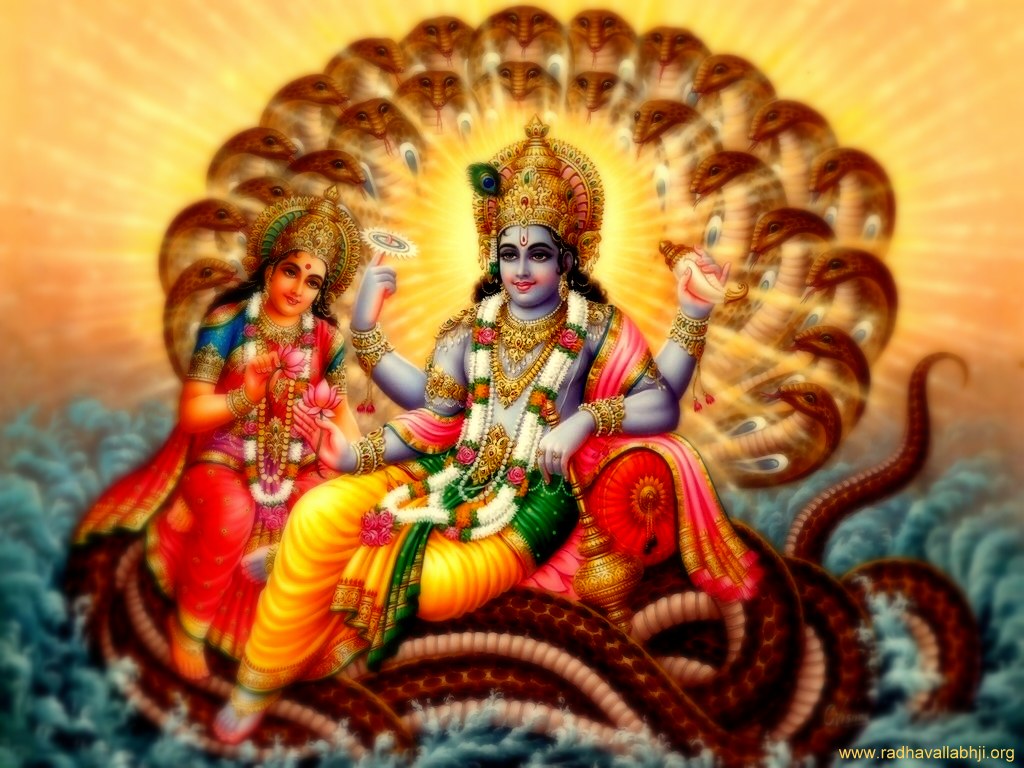
The month of Margashirsha (Dec-Jan) also known as Dhanur masa is of great importance to the devotees of Lord Krishna. Lord Krishna says in the Bhagavad-gita  masanam margasirso ham – of the months, I amMargashirsha. The Ekadashi, 11th day of the waxing moon of Margashirsha masa is popularly known asVaikuntha Ekadashi. This Ekadashi acquires significance because the great devotee Nammalwar, who comes in the disciplic succession of Sri Ramanuja, went back to Godhead on this day. Lord Vishnu, the Lord of Vaikuntha was at the door to receive His pure devotee. To commemorate this great event, generally all Vishnu temples create a Vaikuntha dwara – a special entrance – in the temple and the utsava Deities of the temple are installed near the dwara. It is said that anyone who passes through the Vaikuntha dwara is guaranteed to go back to Godhead.

Apart from this, Vaikuntha Ekadashi is the day on which the epic churning of the ocean of milk was completed by the demons and demigods and the proverbial nectar obtained. It was also on this day that Lord Krishna spoke the Bhagavad-gita to Arjuna on the battlefield of Kurukshetra.

Ekadashi and the killing of the demon Mura

The Padma Purana describes that once during the Krita (Satya) Yuga, a great demon, Mura attained immense powers by performing great austerities. The demigods were defeated by him and headed by Indra they took shelter of Lord Shiva, who guided them saying that Lord Vishnu alone could solve their tribulation. Accepting the prayers of the demigods, Lord Vishnu fought with Mura. During the long battle, which lasted one thousand celestial years, Vishnu needed to rest for a while. He also realized that Mura could not be destroyed by His conventional ayudhas, and needed a different ayudha, one against which Mura would be vulnerable. He entered a beautiful cave called Himavati in Badarikashrama to rest, and formed the new ayudha. Mura wanted to strike Vishnu while He was sleeping. However, Vishnu made Shakti (Vishnu’s female energy) emerge out of His body and assume the form of a beautiful damsel who fought Mura and reduced him to ashes with one look.

When Vishnu awoke He was very pleased and named this maiden as Ekadashi and granted her a boon. The maiden said, “O Lord, if You are pleased with me and wish to give me a boon, then give me the power to deliver people from the greatest sins if they fast on this day.” Vishnu granted her the boon and declared that people worshipping her would reach Vaikuntha. Thus, it is said, was born the first Ekadashi, which was aDhanur masa shukla paksha Ekadashi.

One earthly year corresponds to one day in deva loka. The earthly year is divided into two parts based on the transit of Sun. The northerly transit of the Sun is called Uttarayana. This corresponds to the calendar months from January to June and lunar months from Margashirsha masa to Ashada masa. The southern transit of the Sun is termed as Dakshinayana which corresponds to the calendar months from June to December. For the heavenly planets Uttarayana corresponds to the day and Dakshinayana to the night. Margashirsha masa,which generally falls in last month of Dakshinayana corresponds to the pre-dawn and during the 11th day of lunar month (Ekadashi), is the time when the dawn just about begins. Hence it is considered auspicious for the propitiation of the supreme Lord Vishnu, as He appears to the denizens of heaven and blesses them.

How is Vaikunta Ekadasi Celebrated?  (by: Surya Prakash Rao vadlamani Venkata)

It is believed that the gates of the heaven- the Gate of Vaikunta open on the Vaikunta Ekadasi day. Temples prepare what is called as ‘Vaikunta Dwaram’ or ‘the gate to the heaven‘ and This gate is opened on this day. In all Vaishnava temples, the northern doors remains open on this day and it is on this day, devotees visit the Lord through this northern entrance.

Fasting is an important aspect of Vaikunta ekadasi and is believed to help in redemption of sins and in attaining Moksha. devotees who observe fast on Vaikunta Ekadashi attain salvation by going to Heaven. people fast for the whole day and maintain vigil. Rice is not eaten on this day.it is believed that demon Muran dwells in the rice and eating of rice could get one feel heavy and hamper the vigil to be kept up. People visit temples offer prayers to Lord Vishnu.

Vaikunta Ekadasi festival is more elaborately celebrated by Vaishnavites. This festival is celebrated with lot of fervour at Vishnu temples in Tamil Nadu, Andhra Pradesh, Kerala and Karnataka. Vaikunta Ekadashi is very important day and celebrated with utmost fervour and devotion in Tirumala Venkateswara Temple at Tirupati, Sri Ranganathaswamy Temple at Srirangam and in Trivandrum Padmanabha Swamy temple.

Source:  Glories of Ekadashi by A. C. Bhaktivedanta Swami Prabhupada

“Jai Shri RadheKrishna”

Shayana Ekadashi in Shukla Paksha

Shayana

Yudhisthira Maharaj said, “Oh Keshava, what is the name of the Ekadashi that occurs during the light fortnight of the month of Ashadha (June – July) and what is the process for observing this event?”

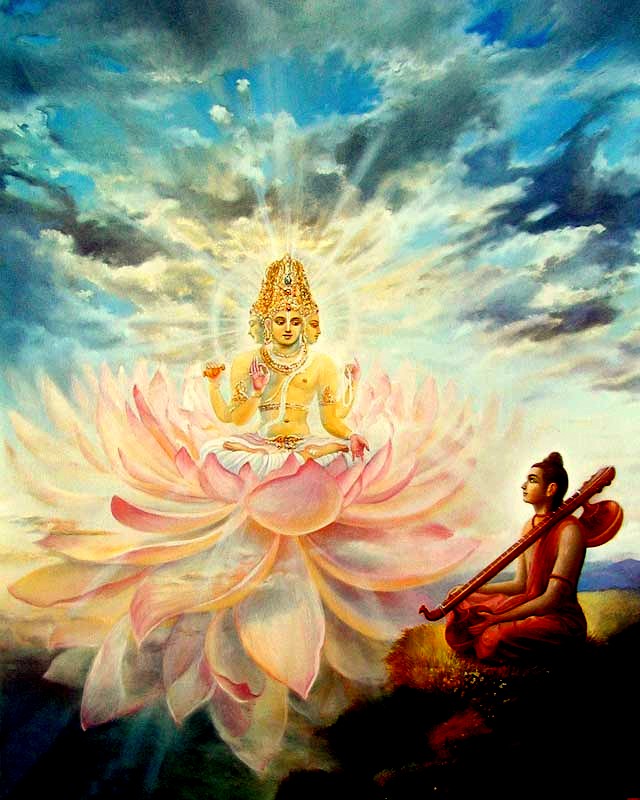
Lord Sri Krishna replied, “I shall tell you a wonderful historical event that Lord Brahma once narrated to his son Narada Muni. One day Narada Muni asked his father, ‘What is the name of the Ekadashi that comes during the light part of the month of Ashadha? Kindly tell me how I should observe this Ekadashi and thus please the Supreme Lord, Sri Vishnu.’

Lord Brahma replied, ‘Your question is as usual excellent for all mankind. For this reason I shall tell you about this Ashadha-shukla Ekadashi.Fasting on this Ekadashi purifies one of all sins and fulfills all desires.Ashadha-shukla Ekadashi is also known as Padma Ekadashi. Just to please the Supreme Lord Hrishikesha, the master of the senses, one should fast on this day. Listen carefully, Oh Narada, as I relate to you a wonderful historical event that was recorded in the scriptures regarding this Ekadashi. Just hearing this account destroys all kinds of sins.

There was once a saintly king in the Surya Vamsha (Sun dynasty) whose name was Mandhata. Because he always stood up for the truth, he was appointed emperor. All his subjects were very wealthy. The king’s own treasury was free of any ill-gotten money, and thus he ruled happily for many years.

Once, however, because of some sin in his kingdom, there was a drought for three years. The lack of food grains made it impossible for the people to perform the prescribed Vedic sacrifices, etc. Finally, they all came before their beloved king and said, ‘Oh king, we humbly beg your assistance now. Everyone and everything in this world needs water. The Vedas call water Nara, and because the Supreme Personality of Godhead sleeps upon water, His another name is Narayana. In His form as the clouds, the Supreme Lord is present throughout the sky and pours forth rains, from which grow the grains that maintain every living entity. The severe drought has caused a great lack of valuable grains; thus we are all miserable, please find some solutions to this problem.’

The king replied, ‘Grains are like Brahman, the Absolute Truth, who lives within grains and thereby sustains all beings. If a king (or head of the country) is irreligious, both he and his subjects suffer. After searching my past and present character I can honestly say that I find no sin. Still, I shall try to remedy the situation.”

King Mandhata assembled his army and entourage, paid his obeisances to me, and then entered the forest. He wandered here and there, seeking great sages in their Ashrams and inquiring about how to resolve the crisis in his kingdom. At last he came upon the ashram of one of my other sons, Angira Muni, whose effulgence lit up all directions. King Mandhata was very pleased to see that exalted sage, whose senses were completely under control.

The king immediately dismounted his horse and offered his respectful obeisances at the lotus feet of Angira Muni. Then Angira Muni asked the king why he had undertaken such a difficult journey into the forest, and the king told him of the affliction his kingdom was suffering. The king said, ‘Oh great sage, to solve this mystery, I have approached you for help.’

Angira Rishi said to the king, ‘The present age, Satya yuga, is the best of all ages, for in this age Dharma stands on all four legs (Truthfulness, Austerity, Mercy, and Cleanliness). In this age everyone respects Brahmins as the topmost members of society. Also, everyone fulfills his occupational duties, and only twice-born Brahmins are allowed to perform Vedic austerities and penances. Although this is a standard, there is one shudra (uninitiated, untrained person) who is thus unlawfully performing the rites of austerity and penance in your kingdom. This is why there is no rain in your land. You should therefore punish this labourer with death, for by so doing you will remove the contamination inflicted by his actions and restore peace to your subjects.’

The king then replied, ‘How can I kill an offenseless performer of austerity and sacrifice? Please give me some spiritual solution.’

Angira Muni then said, ‘Oh king, you should observe a fast on the Ekadashi that occurs during the light fortnight of the month of Ashadha. This auspicious day is named Padma Ekadashi, and by its influence plentiful rains and thus grains and other foodstuffs will surely return to your kingdom. This Ekadashi bestows perfection upon its faithful observers, removes all kinds of bad elements, and destroys all obstacles on the path to perfection.

The king offered his obeisances and then returned to his palace. When the Padma Ekadashi arrived, King Mandhata and all his subjects strictly observed it, the rains fell, just as the sage had predicted, and in due course of time there were abundant crops and a rich harvest of grain. By the mercy of the Supreme Lord Hrishikesha, the master of the senses, all the subjects of King Mandhata became extremely happy and prosperous.

Therefore, Oh Narada, everyone should observe this Ekadashi fast very strictly, for it bestows all kinds of happiness, as well as ultimate liberation, upon the faithful devotee.’

Lord Sri Krishna concluded, “My dear Yudhishthira, Padma Ekadashi is so powerful that one who simply reads or hears its glories becomes completely sinless. Oh Pandava, one who wishes to please Me should strictly observe this Ekadashi, which is also known as Deva Shayani Ekadashi.

“Jai Shri RadheKrishna”