Vaikuntha Ekadasi Festival /Story of Vaikuntha Ekadashi

vaikuntha-ekadashi-vishnu

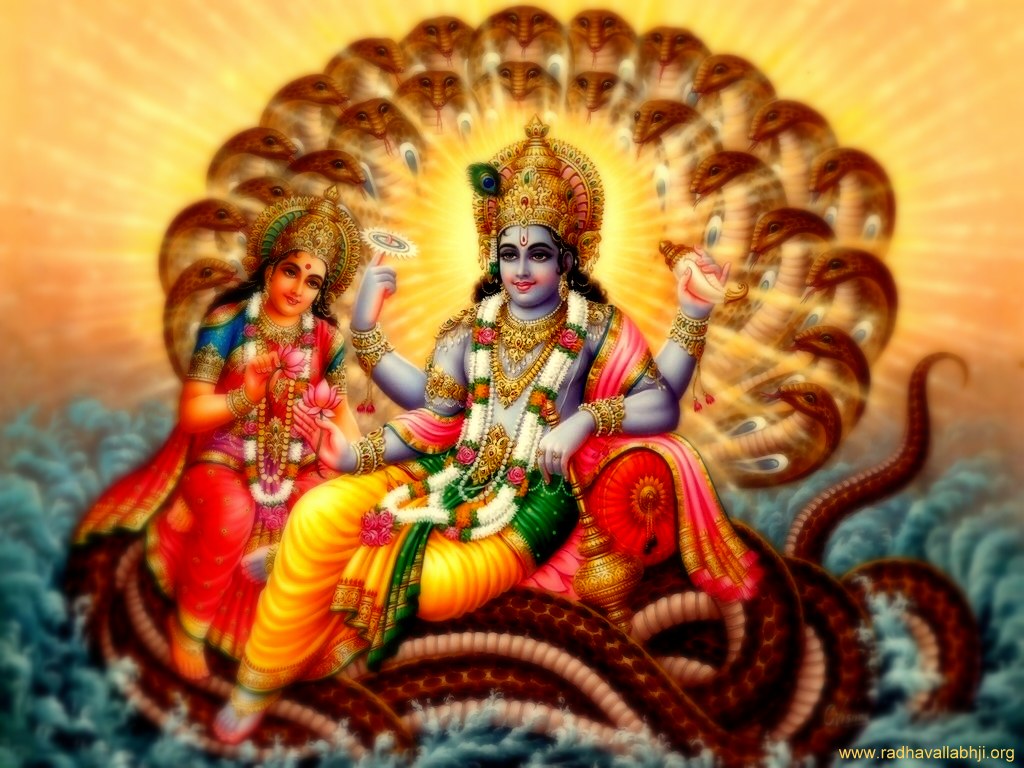
The month of Margashirsha (Dec-Jan) also known as Dhanur masa is of great importance to the devotees of Lord Krishna. Lord Krishna says in the Bhagavad-gita  masanam margasirso ham – of the months, I amMargashirsha. The Ekadashi, 11th day of the waxing moon of Margashirsha masa is popularly known asVaikuntha Ekadashi. This Ekadashi acquires significance because the great devotee Nammalwar, who comes in the disciplic succession of Sri Ramanuja, went back to Godhead on this day. Lord Vishnu, the Lord of Vaikuntha was at the door to receive His pure devotee. To commemorate this great event, generally all Vishnu temples create a Vaikuntha dwara – a special entrance – in the temple and the utsava Deities of the temple are installed near the dwara. It is said that anyone who passes through the Vaikuntha dwara is guaranteed to go back to Godhead.

Apart from this, Vaikuntha Ekadashi is the day on which the epic churning of the ocean of milk was completed by the demons and demigods and the proverbial nectar obtained. It was also on this day that Lord Krishna spoke the Bhagavad-gita to Arjuna on the battlefield of Kurukshetra.

Ekadashi and the killing of the demon Mura

The Padma Purana describes that once during the Krita (Satya) Yuga, a great demon, Mura attained immense powers by performing great austerities. The demigods were defeated by him and headed by Indra they took shelter of Lord Shiva, who guided them saying that Lord Vishnu alone could solve their tribulation. Accepting the prayers of the demigods, Lord Vishnu fought with Mura. During the long battle, which lasted one thousand celestial years, Vishnu needed to rest for a while. He also realized that Mura could not be destroyed by His conventional ayudhas, and needed a different ayudha, one against which Mura would be vulnerable. He entered a beautiful cave called Himavati in Badarikashrama to rest, and formed the new ayudha. Mura wanted to strike Vishnu while He was sleeping. However, Vishnu made Shakti (Vishnu’s female energy) emerge out of His body and assume the form of a beautiful damsel who fought Mura and reduced him to ashes with one look.

When Vishnu awoke He was very pleased and named this maiden as Ekadashi and granted her a boon. The maiden said, “O Lord, if You are pleased with me and wish to give me a boon, then give me the power to deliver people from the greatest sins if they fast on this day.” Vishnu granted her the boon and declared that people worshipping her would reach Vaikuntha. Thus, it is said, was born the first Ekadashi, which was aDhanur masa shukla paksha Ekadashi.

One earthly year corresponds to one day in deva loka. The earthly year is divided into two parts based on the transit of Sun. The northerly transit of the Sun is called Uttarayana. This corresponds to the calendar months from January to June and lunar months from Margashirsha masa to Ashada masa. The southern transit of the Sun is termed as Dakshinayana which corresponds to the calendar months from June to December. For the heavenly planets Uttarayana corresponds to the day and Dakshinayana to the night. Margashirsha masa,which generally falls in last month of Dakshinayana corresponds to the pre-dawn and during the 11th day of lunar month (Ekadashi), is the time when the dawn just about begins. Hence it is considered auspicious for the propitiation of the supreme Lord Vishnu, as He appears to the denizens of heaven and blesses them.

How is Vaikunta Ekadasi Celebrated?  (by: Surya Prakash Rao vadlamani Venkata)

It is believed that the gates of the heaven- the Gate of Vaikunta open on the Vaikunta Ekadasi day. Temples prepare what is called as ‘Vaikunta Dwaram’ or ‘the gate to the heaven‘ and This gate is opened on this day. In all Vaishnava temples, the northern doors remains open on this day and it is on this day, devotees visit the Lord through this northern entrance.

Fasting is an important aspect of Vaikunta ekadasi and is believed to help in redemption of sins and in attaining Moksha. devotees who observe fast on Vaikunta Ekadashi attain salvation by going to Heaven. people fast for the whole day and maintain vigil. Rice is not eaten on this day.it is believed that demon Muran dwells in the rice and eating of rice could get one feel heavy and hamper the vigil to be kept up. People visit temples offer prayers to Lord Vishnu.

Vaikunta Ekadasi festival is more elaborately celebrated by Vaishnavites. This festival is celebrated with lot of fervour at Vishnu temples in Tamil Nadu, Andhra Pradesh, Kerala and Karnataka. Vaikunta Ekadashi is very important day and celebrated with utmost fervour and devotion in Tirumala Venkateswara Temple at Tirupati, Sri Ranganathaswamy Temple at Srirangam and in Trivandrum Padmanabha Swamy temple.

Source:  Glories of Ekadashi by A. C. Bhaktivedanta Swami Prabhupada

“Jai Shri RadheKrishna”
Ananda Ekadashi in Krishna Paksha

HarishchandraSri Yudhisthira Maharaja said, “Oh Janardana, protector of all living entities, please tell me the name of the Ekadashi that occurs during the dark fortnight of the month of Bhadrapada (August-September).”

The Supreme Lord, Sri Krishna, then replied, “Oh King, hear me attentively. The name of this sin-removing, sacred Ekadashi is Aja. Any person, who fasts completely on this day and worships Hrishikesha, the master of the senses, becomes free of all reactions to his sins. Even one who simply hears about this Ekadashi is freed from his past sins. Oh King, there is no better day than this in all the earthly and heavenly worlds.

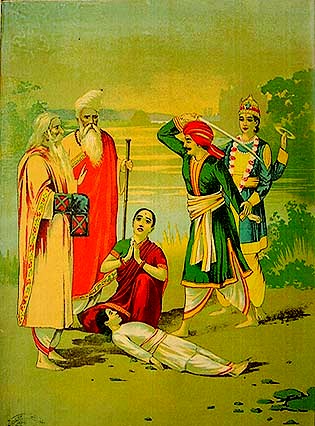
There once lived a king named Harishchandra, who was a person of great truth and integrity. His wife’s name was Chandramati, and he had a son named Lohitashva. By the force of destiny, however, Harishchandra lost his great kingdom and sold his wife and son. The pious king himself became a menial servant of a dog-eater, who made him guard a crematorium. Yet even while doing such menial service, he did not forsake his truthfulness and good character.

Then one day he sadly thought, ‘What shall I do? Where shall I go? How can I be delivered from this plight?’ In this way he drowned in an ocean of anxiety and sorrow. One day a great sage happened by, and when the king saw him, he paid his respectful obeisances to the sage, whose name was Gautama Muni. With joined palms the king stood before Gautama Muni and narrated his pitiful story. Gautama Muni was astonished to hear the king’s tale of woe. He thought, ‘How has this mighty king been reduced to collecting clothes from the dead?’ Gautama Muni became very much compassionate toward Harishchandra and instructed him on the process of fasting for purification.

Gautama Muni said, ‘Oh king, during the dark fortnight of the month of Bhadrapada there occurs an especially meritorious Ekadashi named Aja (Annada), which removes all sins. Indeed, this Ekadashi is so auspicious that if you simply fast on that day and perform no other austerity, all your sins will be nullified. By your good fortune it is coming in just seven days. So I urge you to fast on this day and remain awake through the night. If you do so, all the reactions of your past sins will come to an end. Oh Harishchandra, I have come here because of your past pious deeds. Now, all good fortune to you in the future!’

King Harishchandra followed Gautama Muni’s instructions concerning fasting on the sacred day of Aja Ekadashi. Oh Maharaja Yudhisthira, because the king fasted on that day, the reactions to his previous sins were completely destroyed at once. Just see the influence of this Ekadashi fast! It immediately vanquishes whatever miseries one may be suffering as a result of past karmic sinful activities.

Thus all Harishchandra’s miseries were relieved. Just by the power of this wonderful Ekadashi, he was reunited with his wife and son, who had died but were now revived. By the blessings of the Ekadashi fast, he regained his kingdom without difficulty. Moreover, when King Harishchandra left the planet, his relatives and all his subjects too, went with him to the spiritual world.

Whoever fasts on Aja Ekadashi is surely freed from all his sins and ascends to the spiritual world. And whosoever hears and studies the glories of this Ekadashi achieves the merit gained by performing a horse sacrifice.”

Thus ends the narration of the glories of Bhadrapada-krishna Ekadashi, or Aja Ekadashi, from the Brahma-vaivarta Purana.

“Jai Shri RadheKrishna”

Pavitropana Ekadashi in Shukla Paksha

krishnas Cow

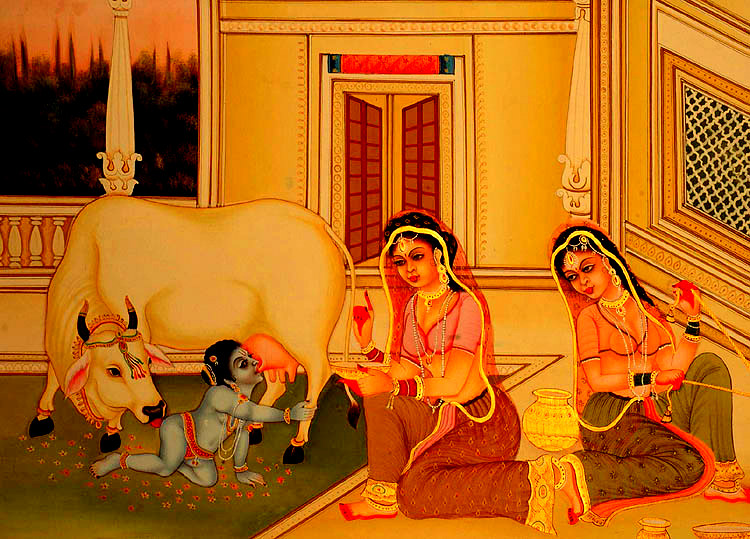
Shri Yudhisthira Maharaja said, “Oh Madhusudana, please describe to me the Ekadashi that occurs during the light fortnight of the month of Shravana (July-August).” The Supreme Lord, Sri Krishna, replied, “Yes, I shall happily narrate its glories to you, for just by hearing about this sacred Ekadashi one attains the merit of performing a horse sacrifice.

At the dawn of Dvarpara-yuga there lived a king by the name of Mahijita, who ruled the kingdom of Mahismati-puri. As he had no son, his kingdom seemed cheerless to him.

The Sanskrit word for ‘son’ is putra. Pu is the name of a particular hell, and tra means ‘to deliver.’ Thus the word putra means ‘a person who delivers one from the hell named Pu.’ Therefore every married man should produce at least one son and train him properly; then the father will be delivered from a hellish condition of life. But this injunction does not apply to the serious devotees of Lord Vishnu or Krishna, for the Lord becomes their son, father, and mother.

For a long time this king tried very hard to obtain an heir, but to no avail. The king’s advisers visited various great sages. At last they came upon a sage who was austere, pure, and self-satisfied, and who was strictly observing a vow of fasting. He was expert in all the conclusions of the Vedas, and he had extended his life span to that of Lord Brahma himself. His name was Lomasa Rishi, and he knew the past, present, and future.

King Mahijita’s advisers offered obeisances to him and said, ‘Only because of our great good fortune, have we been allowed to see you.’  Lomasa Rishi saw them bowing down to him and replied, ‘Kindly let me know why you have come here. I shall do all I can to solve your problems.’

The king’s representatives said, ‘Our king, Mahijita, is without a son, though he has sustained and protected us as if we were his sons. We request you to tell us how our king can obtain a son.’

Lomasa Rishi absorbed himself in deep meditation for a moment and at once understood the king’s previous life. Then he said, ‘Your ruler was a merchant in his past life, and feeling his wealth insufficient, he committed sinful deeds. He traveled to many villages to trade his goods. Once, at noon he became thirsty while traveling from place to place. He came upon a pond and just as he was about to drink, a cow arrived there with her new-born calf. When the cow and calf started to drink, the merchant rudely shoved them aside and selfishly slaked his own thirst. This offense against a cow and her calf has resulted in your king’s being without a son now. But the good deeds he performed in his previous life have given him rulership over an undisturbed kingdom.’

Hearing this, the king’s advisers replied, ‘Oh renowned rishi, please give us some instruction by which our king’s sins can be destroyed; so that a prince will take birth in his family.’

Lomasa Rishi said, ‘There is an Ekadashi called Putrada, which comes during the light fortnight of the month of Shravana. On this day all of you, including your king, should fast and stay awake all night, strictly following the rules and regulations. Then you should give the king whatever merit you gain by this fast, he will surely be blessed with a fine son.’

When the month of Shravana arrived, all the citizens of Mahismati-puri, as well as the king, fasted on Ekadashi. And on the next day, Dwadashi, the citizens dutifully offered their accrued merit to him. By the strength of all this merit, the queen became pregnant and eventually gave birth to a beautiful son.

“O Yudhisthira,” Lord Krishna concluded, “the Ekadashi that comes during the light fortnight of the month of Shravana has thus rightfully become famous as Putrada [“bestower of a son”]. Whoever desires happiness in this world and the next should certainly fast from all grains and legumes on this holy day. Indeed, whoever simply hears the glories of Putrada Ekadashi becomes completely free of all sins, is blessed with a good son, and surely ascends to heaven after death.

Thus ends the narration of the glories of Shravana-shukla Ekadashi, or Putrada Ekadashi, from the Bhavishya Purana.

“Jai Shri RadheKrishna”