
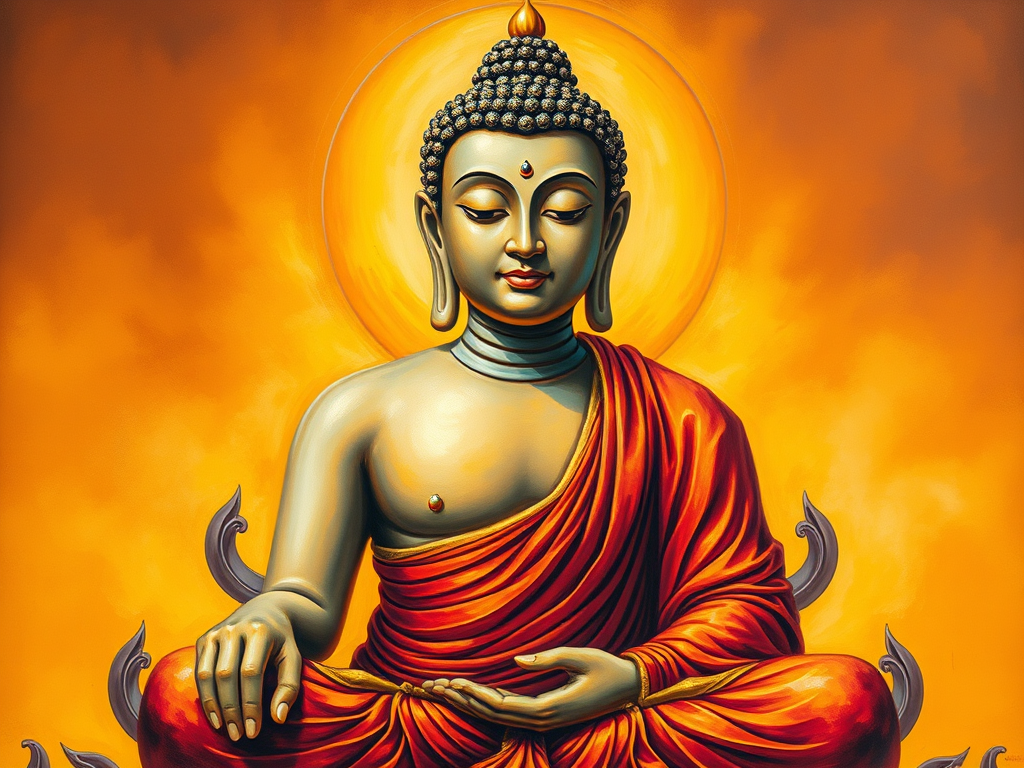
There are moments in life when silence speaks louder than sound. When the stillness of a being moves you more than the fiercest battle cry. For me, one such moment was when I truly understood the significance of Lord Vishnu’s 9th incarnation—Lord Buddha.
I’ve always been drawn to the tales of the Dashavatara—the ten incarnations of Lord Vishnu. As the Preserver among the holy trinity, Vishnu’s role is to restore dharma (righteousness) whenever the balance of good and evil begins to tip dangerously. Most of these avatars—be it Rama, Krishna, Narasimha, or Parshurama—are dramatic, powerful, and even aggressive when necessary. They defeat demons, guide kings, and influence the course of history.
But then comes the ninth—Lord Buddha—gentle, serene, still.
A Shift in Perception
I’ll admit it took me a while to wrap my head around this. How could a figure known for meditation, silence, and renunciation be the same as the Vishnu who slayed tyrants and upheld righteousness with weapons in hand?
But perhaps that was the whole point.
Because by the time Vishnu took his ninth form, the threats weren’t just external. The demons had moved inward. They wore the masks of ego, blind faith, and violence in the name of religion. People had become rigid, clinging to rituals and sacrificing beings without compassion. Dharma had become distorted.
So Vishnu, in his divine wisdom, chose a form that would wage war—not with swords, but with silence. Not with anger, but with awareness.
The Birth of a Revolutionary
Born as Siddhartha Gautama in Lumbini, he was raised in luxury, shielded from sorrow. But fate had other plans. When he stepped outside his palace walls and saw sickness, aging, and death for the first time, something within him cracked open.
He renounced everything—his wealth, his title, his family—and set out in search of truth. Years of meditation, asceticism, and inner struggle followed, until one fateful night under the Bodhi tree, he awakened. He became The Buddha, the Enlightened One.
And in that awakening, Vishnu fulfilled his role once again—by restoring balance not through force, but through wisdom.
Why This Avatar Feels Personal
I’ve often thought about how this story parallels the journeys we all go through in life.
We begin with ambition, dreams, and an urge to conquer the world. But somewhere along the way—through heartbreaks, losses, introspection—we begin to realize that the real battle isn’t out there. It’s inside. It’s against our impulses, our ego, our attachments.
In that sense, Lord Buddha feels like the most relatable of Vishnu’s avatars. He doesn’t ask you to be a warrior or a king. He simply invites you to look within. To be still. To observe your thoughts. To question your suffering. To choose compassion over conflict, clarity over chaos.
And isn’t that a message we all need today?
Lessons from the 9th Avatar
Here are a few truths from Lord Buddha’s life that have personally stayed with me:
- “Peace comes from within. Do not seek it without.”
It’s easy to blame the world for our discomfort. But healing begins when we stop pointing outward and start listening inward. - “Desire is the root of all suffering.”
In a world driven by ‘more’—more success, more validation, more possessions—this reminder is grounding. Sometimes, letting go is more powerful than holding on. - “Be mindful.”
Whether it’s a conversation with a loved one, a decision at work, or a quiet moment with ourselves—awareness transforms everything. - “All that we are is the result of what we have thought.”
Our thoughts shape our reality. What we feed our minds determines the lives we lead.
These aren’t just spiritual teachings—they’re life skills. They help us navigate modern challenges with ancient wisdom.
A Legacy of Light
The 9th incarnation also blurs the lines between traditions. While Buddhism and Hinduism are often seen as separate paths, the inclusion of Buddha in the Dashavatara reminds us that truth is universal, and wisdom transcends boundaries. The divine doesn’t care for man-made divisions. It flows where it’s needed.
To me, this is beautiful. It’s inclusive. It’s timeless.
It says: whether you call him Vishnu, Buddha, or simply your inner guide—what matters is that you walk the path with sincerity.
Final Reflections
There’s something incredibly powerful about an avatar that doesn’t come to fight but to awaken. Lord Buddha didn’t change the world through violence—he did it through stillness, compassion, and truth.
In today’s hyper-connected, hyper-distracted world, maybe that’s the most divine message of all. That stillness is strength. That presence is power. That the true “dharma yuddha” (battle for righteousness) begins within us.
And perhaps, just perhaps, when we sit quietly and listen to the silence within, we may feel the gentle presence of Vishnu—as Buddha—still guiding us toward the light.
 Self Discovery
You must be logged in to post a comment.