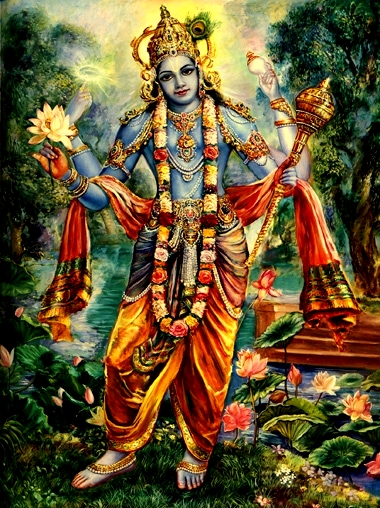
Apara Ekadashi in Krishna Paksha

yudhiSri Yudhishthira Maharaj said, “Oh Janardana, what is the name of the Ekadashi that occurs during the dark fortnight (Krishna paksha) of the month of Jyeshtha (May-June) I wish to hear from You the glories of this sacred day of Hari.” 

Lord Sri Krishna said, “Oh king, your inquiry is wonderful because the answer will benefit the whole human society. This Ekadashi is so sublime and meritorious that even the greatest sins can be erased by its purity. 

The name of this unlimitedly meritorious Ekadashi is Apara Ekadashi. Whoever fasts on this holy day becomes famous all over the universe. Even such sins as killing a brahmana, a cow, or an embryo; blasphemy; or having sex with another man’s wife are completely eradicated by observing Apara Ekadashi. 

Oh king, people who bear false witness are most sinful. A person who falsely or sarcastically glorifies another; one who cheats while weighing something on a scale; one who fails to execute the duties of his varna or ashrama (an unqualified man posing as a brahmin, for example, or a person reciting the Vedas wrongly); one who invents his own scriptures; one who cheats others; one who is a charlatan astrologer, a cheating accountant, or a false Ayurvedic doctor – are all destined for hellish punishments. But simply by observing Apara Ekadashi, all such sinners become completely free of their sinful reactions.

Warriors who fall from their Kshatriya-dharma and flee the battlefield go to a ferocious hell. But, Oh Yudhishthira, even such a fallen Kshatriya, if he observes fasting on Apara Ekadashi, he is freed of that great sinful reaction and goes to heaven.

That disciple is the greatest sinner who, after receiving a proper spiritual education from his spiritual master, turns around and blasphemes him. Such a so-called disciple suffers unlimitedly. But if he simply observes Apara Ekadashi, he can attain to the spiritual world.

The merit attained by one who performs all of the following acts of piety is equal to the merit achieved by one who observes Apara Ekadashi: bathing three times daily in Pushkara-kshetra during Kartika (October-November); bathing at Prayag in the month of Magh (January-February) when the sun is in the zodiac of Capricorn; rendering service to Lord Shiva at Varanasi (Benares) during Shiva-ratri; offering oblations to one’s forefathers at Gaya; bathing in the sacred Gautami River when Jupiter transits Leo (Simha); having darshan of Lord Shiva at Kedarnatha; seeing Lord Badrinath when the Sun transits the sign of Aquarius (Kumbha); and bathing at the time of a solar eclipse at Kurukshetra and giving cows, elephants, and gold there in charity. All the merit one gets from performing these pious acts is gained by a person who observes the Apara Ekadashi fast. Also, the merit attained by one who donates a pregnant cow, along with gold and fertile land, is attained by one who fasts on this day.

In other words, Apara Ekadashi is an axe that cuts down the fully matured forest full of trees of sinful deeds. Therefore, Oh Yudhisthira, whoever truly fears his past and present sins must observe Apara Ekadashi very strictly. One who does not observe this fast must be born again in the material world, like one bubble among millions in a huge body of water, or like a small ant among all other species.

Therefore one must faithfully observe the sacred Apara Ekadashi and worship the Supreme Personality of Godhead, Sri Trivikrama. One who does so is freed of all his sins and promoted to the abode of Lord Vishnu.

Anyone who hears or reads this description is certainly freed from all kinds of sins, oh best of saintly kings, Yudhishthira.” 

“Jai Shri RadheKrishna”

Mohini Ekadashi in Shukla Paksha

Jai Shri RamYudhishthira Maharaja said, “O Janardana, what is the name of the Ekadashi that occurs during the light fortnight of the month of Vaishakha (April-May)? What is the process for observing it properly?”

Lord Sri Krishna replied, “What Vasishtha Muni once told Lord Ramachandra I shall now describe to you. Lord Ramachandra asked Vasishtha Muni, ‘O great sage, I would like to hear about the best of all fasting days – that day which destroys all kinds of sins and sorrows. I have suffered long enough in separation from My dear Sita, and so I wish to hear from you about how My suffering can be ended.’

Sage Vasishtha replied, ‘O Lord Rama, You have questioned me in order to benefit all of humanity and fulfill everyone’s desires. That day is Vaishakha-sukla Ekadashi, which falls on Dvadashi. It removes all sins and is famous as Mohini Ekadashi.  The merit of this Ekadashi frees the fortunate soul from illusion. Therefore, if You want to relieve Your suffering, observe this auspicious Ekadashi perfectly, for it removes all obstacles from one’s path and relieves the greatest miseries. If one even just hears about this auspicious Ekadashi, the greatest sins are nullified.

“On the banks of the Sarasvati river there was once a beautiful city named Bhadravati, which was ruled by King Dyutiman. O Rama, that steadfast, truthful, and highly intelligent king was born in the dynasty of the moon. In his kingdom was a merchant named Dhanapala, who possessed a great wealth of food grains and money. He was also very pious. Dhanapala arranged for lakes to be dug, sacrificial arenas to be erected, and beautiful gardens to be cultivated for the benefit of all the citizens of Bhadravati. He was an excellent devotee of Vishnu and had five sons: Sumana, Dyutiman, Medhavi, Sukruti, and Dhristabuddhi.

Unfortunately, his son Dhristabuddhi was always engaged in greatly sinful activities, he enjoyed illicit sex, gambling, and many other varieties of sense gratification. He disrespected the demigods; brahmanas; forefathers and other elders; and his family’s guests. He spent his father’s wealth indiscriminately, always feasting on untouchable foods and drinking wine to excess.

One day Dhanapala kicked Dhristabuddhi out of the house after he saw him walking along the road arm-in-arm with a prostitute. From then on all Dhristabuddhi’s relatives were highly critical of him and distanced themselves from him. After he had sold his ornaments and become destitute, the prostitutes also abandoned him because of his poverty.

Dhristabuddhi was now full of anxiety, and also hungry. He thought, “What should I do? How can I maintain myself?” He then began to steal. The king’s constables arrested him, and after whipping him, they warned him, “O evil one! There is no place for you here.”

However, he entered the dense forest. He wandered here and there, hungry and thirsty and suffering greatly. Eventually he began killing lions, deer, boars, and wolves for food and thus his sins mounted day by day. On account of his previous sins, he was now immersed in an ocean of great sin.

Dhristabuddhi was always miserable and anxious, but one day, during the month of Vaishakha, by the force of some of his past merit he chanced upon the sacred ashrama of Kaundinya Muni. The great sage had just finished bathing in the Ganges river, and water was dripping from him. Dhristabuddhi had the great good fortune to touch some of those drops falling from the sage’s clothes. Instantly Dhristabuddhi was freed of ignorance, and his sinful reactions were reduced. Offering his humble obeisances to Kaundinya Muni, Dhristabuddhi prayed to him with joined palms: “O great brahmana, please describe some kind of atonement I may perform without too much endeavor. I have committed so many sins in my life, and these have now made me very poor.”

The great rishi replied, “O son, listen with great attention, for by hearing me you will become free of all your remaining sins. In the light fortnight of this month, Vaishakha, there occurs the sacred Mohini Ekadashi, which has the power to nullify sins as vast and weighty as Mount Sumeru. If you follow my advice and faithfully observe a fast on this Ekadashi, which is so dear to Lord Hari, you will be freed from all the sinful reactions of many, many births.”

According to the sage’s instructions, by fasting completely on Mohini Ekadashi, the once-sinful Dhristabuddhi became sinless. Afterwards he achieved a beautiful transcendental form and, free at last of all obstacles, rode upon Garuda, the carrier of Vishnu, to the Lord’s supreme abode.

“O Rama, the fast day of Mohini Ekadashi removes the illusory attachments to material existence. There is no better fast day in all the three worlds.”

Lord Krishna concluded, “And so, Yudhisthira, there is no place of pilgrimage, no sacrifice, and no charity that can bestow merit equal to even one sixteenth of the merit a faithful devotee of Mine obtains by observing Mohini Ekadashi, and he who hears and studies the glories of Mohini Ekadashi achieves the merit of giving away one thousand cows in charity.

“Jai Shri RadheKrishna”

Varuthini Ekadashi in Krishna Paksha

ekadasi1Sri Yudhishthira Maharaj said, “Oh Vasudeva, please describe to me the Ekadashi of the dark fortnight (Krishna paksha) of the month of Vaishakha (April-May).”

Lord Sri Krishna replied, “In this world and the next, the most auspicious and magnanimous Ekadashi is Varuthini Ekadashi. A person who observes a complete fast on this sacred day has his sins completely removed and obtains continuous happiness.

Upon anyone who observes it, this Ekadashi bestows material enjoyment in this life and liberation after the death of this present body. It destroys the sins of all and saves people from the miseries of repeated rebirth. Fasting on Varuthini Ekadashi makes even an unfortunate woman fortunate.

The merit that one achieves by donating gold during a solar eclipse at Kurukshetra is gained by one who observes this Ekadashi with love and devotion, and certainly attains his goals in this life and the next.

Better than giving horses in charity is giving elephants, and better than giving elephants is giving land. But better still is the giving of sesame seeds, and better than that is giving of gold. Still better than giving gold is giving food grains – for all the forefathers, demigods (devas), and human beings become satisfied by eating grains. Thus there is no better gift of charity than this in the past, present and future.

Yet learned scholars have declared that giving away a young maiden in marriage to a worthy person is equal to giving away food grains in charity. Moreover, giving cows in charity is equal to giving food grains. Still better than all these charities is teaching spiritual knowledge to the ignorant. The merits one can attain by performing all these acts of charity are attained by one who fasts on the Varuthini Ekadashi.

Any householder who takes his daughter’s wealth out of greed, who tries to sell his daughter, or who takes money from the man to whom he has given his daughter in marriage – such a householder becomes a lowly cat in his next life. Therefore it is said that whoever, as a sacred act of charity, gives away in marriage a maiden decorated with various ornaments, and who also gives a dowry with her, obtains untold merit. That very same merit, however, can be easily achieved by one who fasts on the Varuthini Ekadashi.

The following things should be given up on the Dashami, the day before the Ekadashi: eating on bell-metal plates, eating urad-dal, red-lentils, chick-peas, eating kondo – a grain that resembles poppy seeds, spinach, honey, eating in another person’s house, eating more than once, and participating in sex of any kind.

Whoever observes the Varuthini Ekadashi in this way becomes free from all sinful reactions and returns to the eternal, spiritual abode. One who worships Lord Janardana (Krishna) on this Ekadashi by staying awake throughout the entire night, also becomes free from all his previous sins and attains the spiritual abode. Therefore, Oh king, he who is frightened of his accumulated sins and their attendant reactions, and thus of death itself, must observe Varuthini Ekadashi by fasting very strictly.

Finally, he who hears or reads this glorification of the sacred Varuthini Ekadashi obtains the merit earned by donating one thousand cows in charity, and at last he returns home, to the Supreme abode of Lord Vishnu in the Vaikunthas.”

“Jai Shri RadheKrishna”